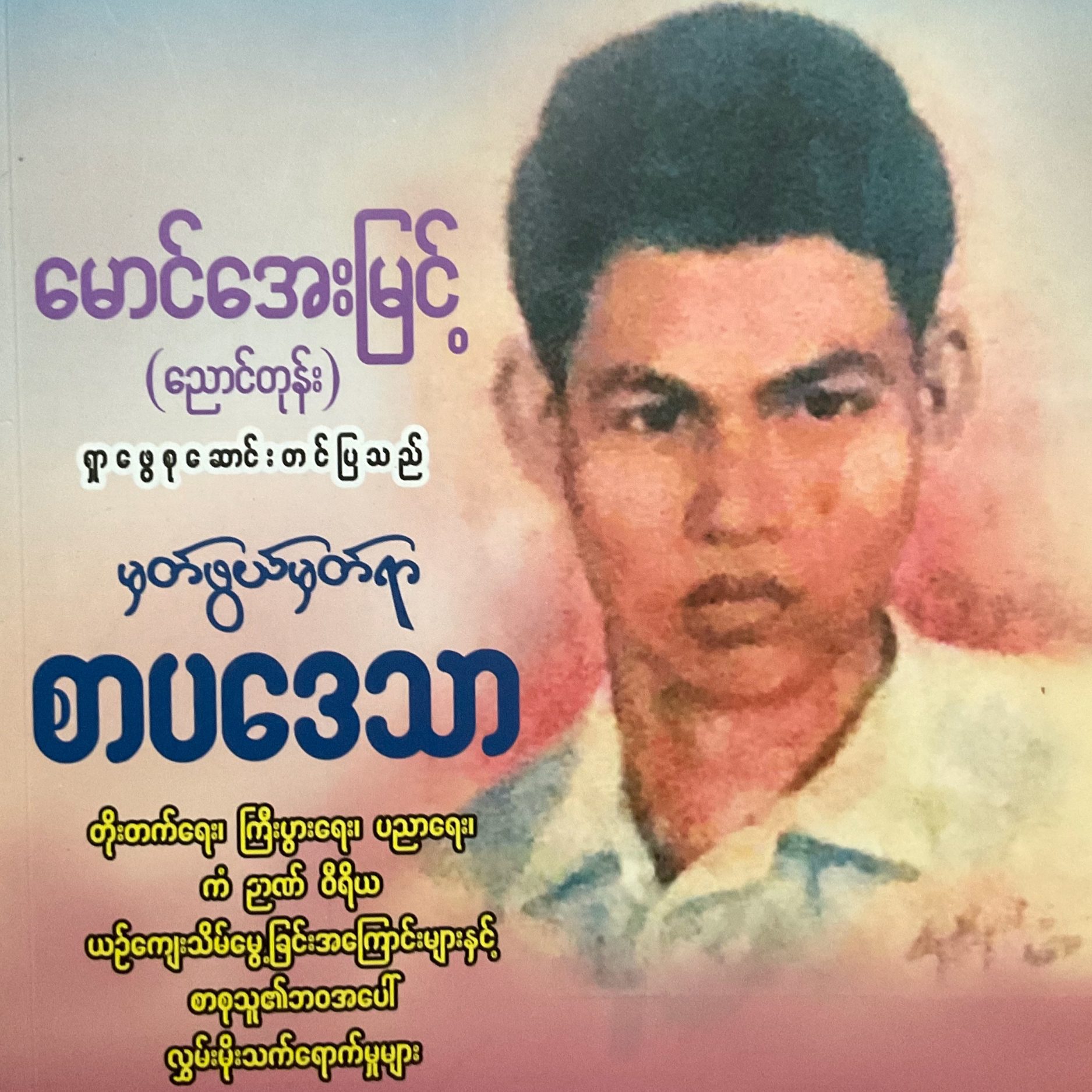

တချိန်က စည်ပင်ခဲ့တဲ့ ပျူမြို့တော်ကြီး ဘာကြောင့် ပျက်စီး ခဲ့ရသလဲ (အစ-အဆုံး ) ပျူတွေဘယ်ပျောက်သွားသလဲ -ဒေါက်တာသန်းထွန်း, https://youtu.be/qLNMAR88pjE?si=6KjFCSOdKDx3bqhr
မြန်မာ ခေတ် အဆက်ဆက် တကောင်း -သရေ ခေတ္တရာ -ပုဂံ အပိုင်း (၁ ) https://youtu.be/DniP1FAAJlk?si=4QEe25VWDbb20gtg
ပျူလူမျိုး ပုဗရမိ ( ပျူ ဗရမ္မာ ၊ ပျူ မြန်၄ာ ) ဘုန်းတင့်ကျော် အပိုင်း( 2 ) https://youtu.be/ImpXit3ZUms?si=UcVroOocjzJt3-z1
ပျူလူမျိုး ၊ပျူစာ ဗြ ဟ်မာ၊ မြမ္မာ ။ ဘရမာ ဗမာ အပိုင်း(၁ ) https://youtu.be/-pLUmbW6gRg?si=BEoXv-dYnSgn4zt2
ပျူ သရေခေတ္တရာ https://youtube.com/shorts/pvGseZfv9wg?si=6FpEfiqd3_X3iXoG
ရှေးဟောင်း ပြဒါးလင်းဂူ အကြောင်း
How Tibetan Migrants Built a Burmese Civilization
Today I dive into the overlooked historical influence that Tibet has had on Myanmar, often overshadowed by the more widely recognized influences from India, China, and Southeast Asia. We’ll explore the ethnic origins of the ancient Pyu city-states, tracing their connections to the Tibetan Plateau around Qinghai Lake. I’ll also discuss the possible genetic contributions of Tibetan Empire warriors on early Burmese migrants and draw intriguing parallels between the histories of Tibet and Myanmar.
Timestamps:
0:00 Intro
0:10 Myanmar’s influences from its neighbors
0:50 Pyu city-states
1:00 Origin of the Pyu on the Tibetan Plateau
1:22 Contributions and legacy of the Pyu city-states
2:00 Migrational patterns following Tibet’s River Systems
2:43 Formation of the Bamar (Burmese ethnic group)
3:00 Burmese warriors of Nanzhao raid the Pyu city-states
3:19 Nanzhao and the Tibetan Empire
4:00 Nanzhao conquer the Pyu city-states
4:15 End of the Pyu city-states
4:40 Facts about Nanzhao
4:51 Tibetan Warriors among the “Swift Horsemen From The North”
5:27 Ancestral Homeland on Qinghai Lake (Tsongön Lake)
5:46 Similarity between Pyu city-state artifacts and Tibetan Dzi Beads
6:19 Tibeto-Burman Language Family Connection
7:25 Spread of Tibeto-Burman Languages Through Migrations Following Tibet’s River Systems
7:58 Genetic Connection Between Tibetans and Burmese
9:14 Religious Parallels Between Tibet and Myanmar
10:18 Wrapping It Up.
Educlectic (formerly “Eclectic Explorations”) seeks to educate a global audience and invoke conversations on fascinating lesser-known subjects through thoughtful storytelling. From publicizing untold historical events to interesting zoological concepts, hidden gems in cinema and literature and much more.
I also occasionally post videos of interesting things I bear witness to in the world.*
If you enjoy my videos please consider supporting the channel by liking, sharing, subscribing. I gladly accept any and all donations. In return, I will give a shoutout and public thank you message.
Lost Civilization
Ötzi the Iceman, discovered in the Ötztal Alps between Austria and Italy, offers a rare glimpse into the Copper Age, around 3300 BCE.
His mummified remains, preserved by the glacier, provide unprecedented insight into Copper Age life, revealing his clothing, tools, and even his last meals. The natural processes of freezing and desiccation have transformed him into a time capsule of human history.
Ötzi, a silent storyteller, lies between the realms of nature and humanity, his frozen slumber a poignant reminder of our fleeting existence and the enduring mysteries of the past.
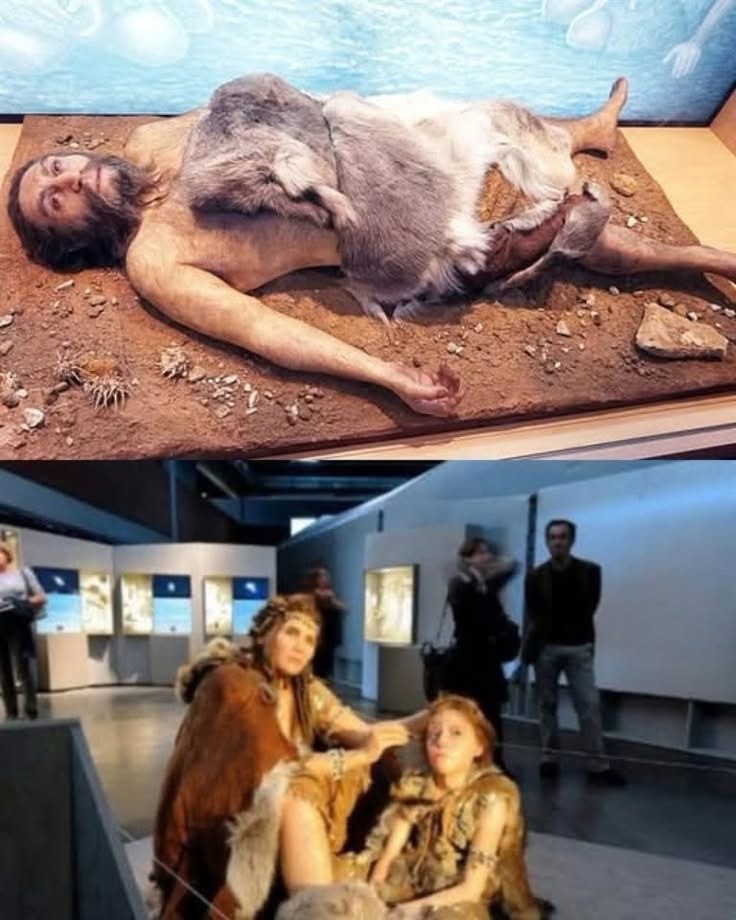
Naqsh-e Rostam, situated near Persepolis in Iran, is a testament to the power and legacy of the Achaemenid and Sasanian empires, with its reliefs primarily dating from the 3rd to 7th centuries CE.
Carved directly into the cliff face, these monumental reliefs depict scenes of royal triumph and divine investiture. The stone bears the marks of time and weather, yet it stands as a vivid record of ancient artistry, revealing the cultural and political narratives of its era.
Here, stone and sky converge, a silent dialogue between human ambition and the unyielding rhythm of nature. The carvings endure as a paradox: static forms that echo with the dynamism of history, inviting us to contemplate our place within its grand, unfolding story.
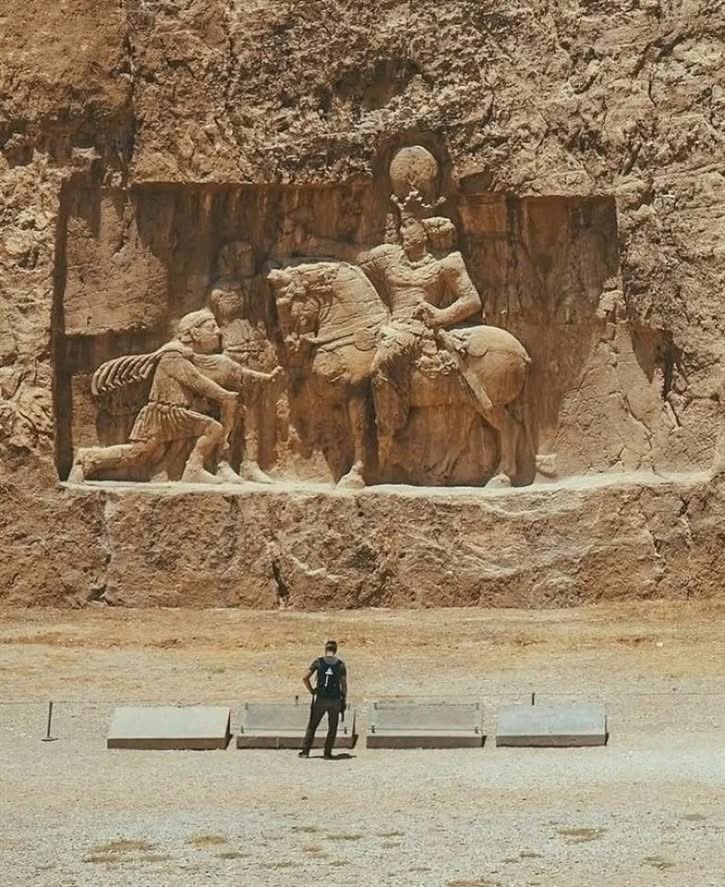
El Castillo, rising from the Yucatán Peninsula in Mexico, stands as a testament to the Maya civilization, dating back to approximately 600-1200 AD.
Its stepped terraces, aligned with cosmic precision, bear the whispers of astronomical knowledge and ritualistic practices. Limestone blocks, weathered by centuries of sun and rain, trace the shadows of time across its imposing facade, a silent echo of forgotten ceremonies.
A paradox in stone, where human ambition meets nature’s patient hand. The pyramid endures, a beacon of the past, reminding us that even the grandest structures eventually return to the earth from which they came, their stories etched in every weathered stone.
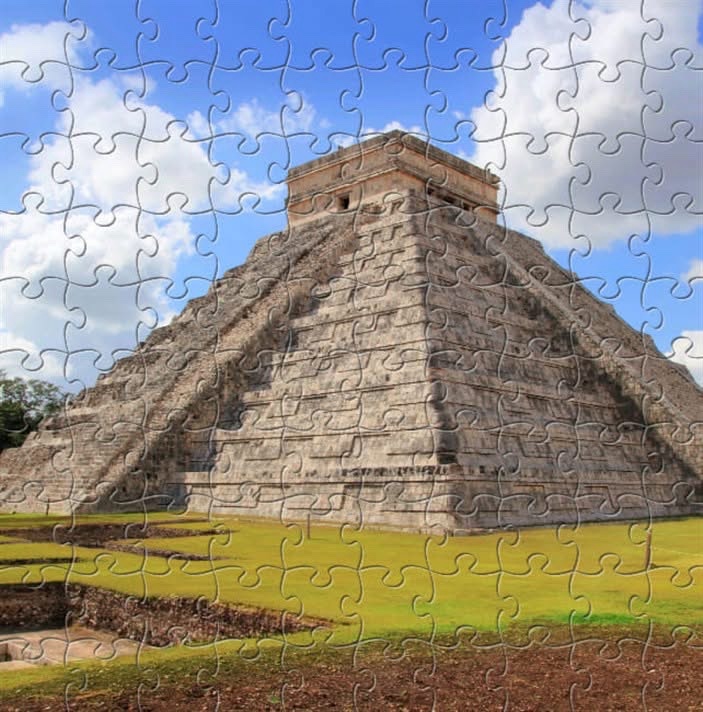
Read more: https://buff.ly/KyAsTxC
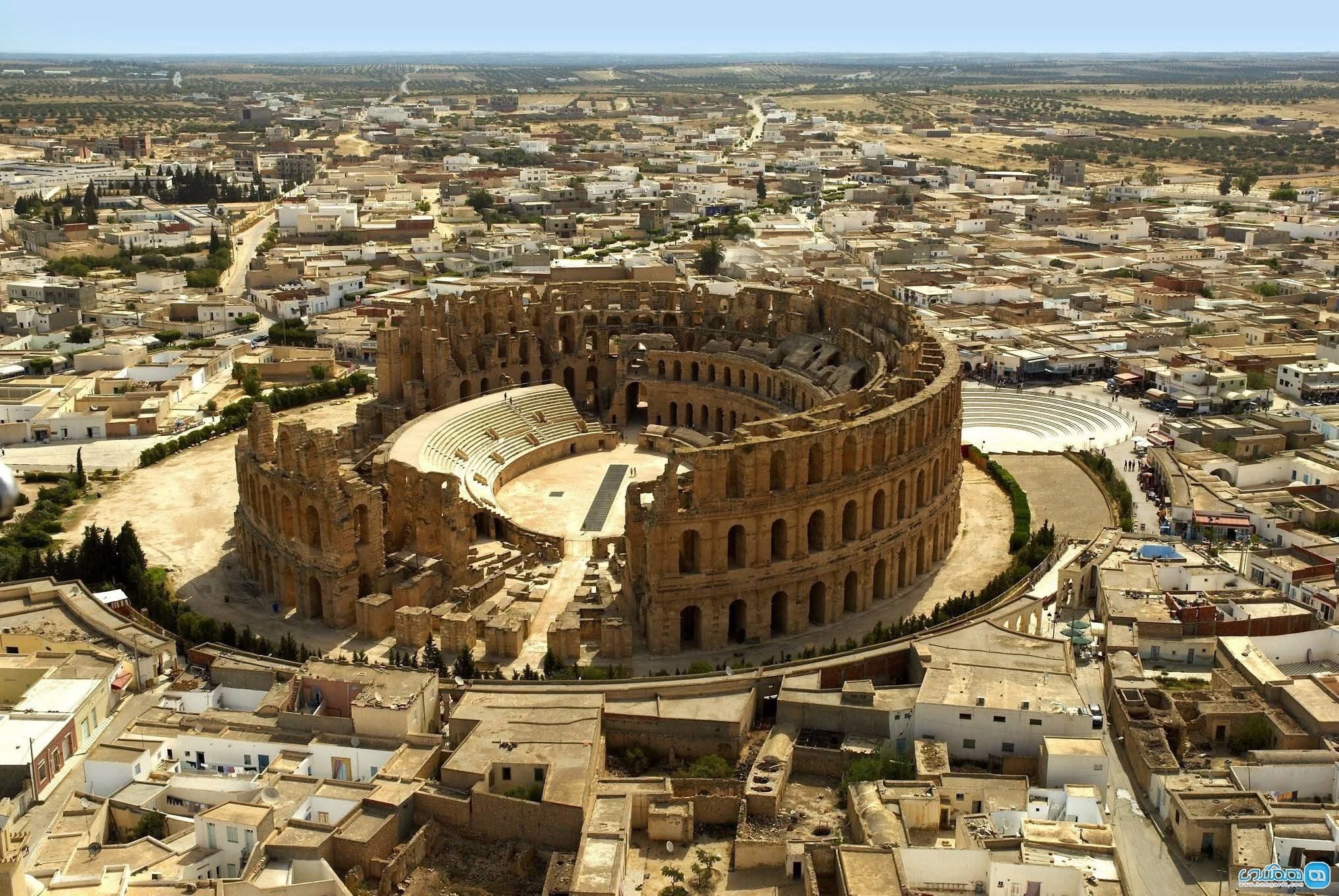
This is the Amphitheatre of El Jem, located in the town of El Jem (ancient Thysdrus) in Tunisia, North Africa. It was constructed around the early 3rd century CE, during the Roman Empire, under the reign of Emperor Gordian. This amphitheatre was one of the largest in the Roman world, with an estimated capacity of 30,000–35,000 spectators, reflecting the prosperity of Roman Africa and its thriving economy based on olive oil trade.
In the image, the vast oval structure dominates the surrounding modern town, showcasing its three tiers of arcades and central arena, though partially ruined. The amphitheatre was built of stone blocks without foundations, a testament to Roman engineering skill. Excavations and preservation efforts in the 20th century helped stabilize the remains, and today it is a UNESCO World Heritage Site. The aerial perspective emphasizes both its grandeur and its survival amidst centuries of history, making it a symbol of Roman legacy in Tunisia.
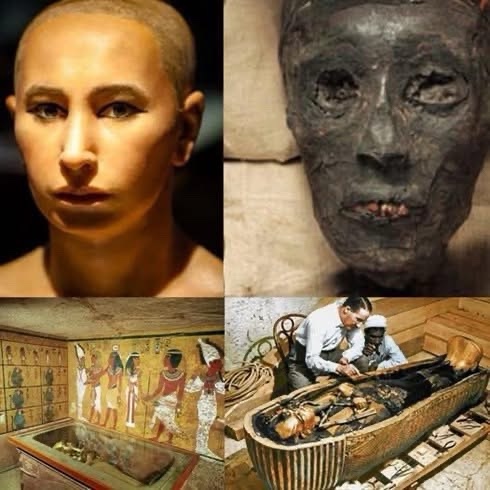
King Tutankhamun’s tomb, nestled in the Valley of the Kings, Egypt, stands as a testament to the 18th Dynasty, dating back to around 1323 BC. It’s a snapshot from the New Kingdom era, a period of immense power and artistic innovation.
Within the tomb, discover a treasure trove of artifacts. The mask, crafted from gold and inlaid with precious stones, contrasts starkly with the mummy’s weathered visage, bearing the indelible marks of time and the embalming process. These remains offer insights into ancient Egyptian funerary practices and beliefs.
The golden sarcophagus and vibrant wall paintings offer a glimpse into eternity. This moment captures the paradox of death and preservation, echoing humanity’s enduring quest for immortality amidst the desert’s silent sands.
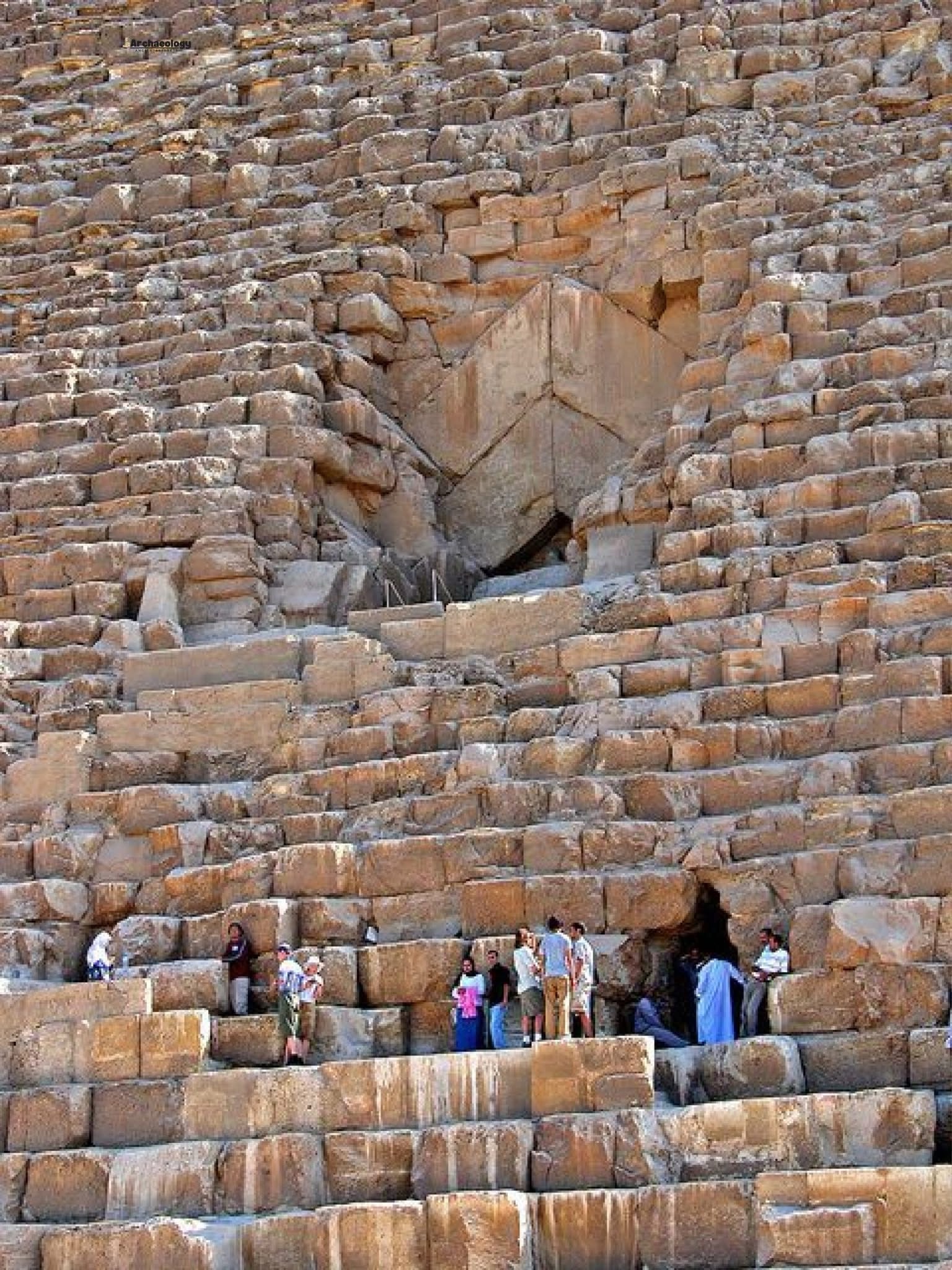
This is the Great Pyramid of Khufu at Giza, Egypt, built around 2,500 BCE as the eternal tomb of Pharaoh Khufu. What you see here is the modern entrance on its north face, located above the original sealed doorway. The rough opening was carved in the 9th century CE by workers under Caliph al-Ma’mun, who forced their way into the pyramid in search of treasures.
The surrounding limestone blocks, each weighing several tons, reveal the immense scale and precision of ancient engineering. Weathered by thousands of years of desert sun and sand, the pyramid still rises with geometric majesty, though scars from human intrusion remain visible. The pointed chevron-shaped stones above the original entrance were designed as structural supports, protecting inner passages from collapse.
Standing at this threshold, one feels both awe and humility: before you stretches a monument of eternity, and yet its wounds tell of human impatience to break into mystery. It is a meeting place of ambition, greed, and wonder. If you were given the chance to enter through this ancient doorway, would you step inside—or hesitate before the silence of history?
The Rise of the Tibetan Empire / The Animated History of Tibet / Episode 1
For a brief period of time, the Tibetan Empire was one of the greatest military and political forces in the entire world, rivalling the Chinese Tang Dynasty, the Islamic Abbasid Caliphate, and even the once-mighty Roman Empire. In the 9th century, however, the entire empire suddenly collapsed, vanishing into history and myth. How did Tibet emerge to become one of the dominant political factions in Central Asia? And why did the empire collapse?
this episode of The Animated History of Tibet, we explore the first 100 years of recorded Tibetan history, beginning with the rise of the Tibetan Empire in the Yarlung Valley under the reign of Songtsen Gampo and the later consolidation of its territories during the regency of the Gar Clan. We also explore the emergence of Buddhism in Tibet and its vital role in shaping the early imperial state.
The writer and director of the series, Dr. Alexander K. Smith, holds a PhD in Tibetan and Himalayan history from the University of Paris, France, and an MA from Oxford University.
For an in-depth discussion of the early Tibetan Empire and the topics discussed in this episode, check out part one of our interview with Professor Brandon Dotson, a specialist in imperial-era history, at Georgetown University:  • Professor Brandon Dotson | On th…
Please consider supporting our work on Patreon so that we can make more content like this in the future:  / armchairacademics
Buy the maps featured in this episode and other original artwork from our merch store: https://armchairacademicsstore.com/
Follow us on Instagram for regular project updates: / animatedhistoryoftibet
Western-language Works Cited
Below you’ll find a number of the major secondary sources that we used in writing this episode. There are, however, a significant number of historical articles, book chapters, and primary Tibetan-language sources that have also contributed to our understanding of Tibetan imperial history. Due to limited space (YouTube only gives you 5,000 characters!), these are not referenced below. If you are interested in learning more about Tibetan history, I recommend visiting our Patreon where you will find expanded reading lists and annotated bibliographies for each episode (none of which are paywalled and are all free to use). The complete reading list for this episode is available here:  / almost-reading-98275071
Beckwith, Christopher I. 1987. The Tibetan Empire in Central Asia. Princeton University Press.
Dotson, Brandon. 2009. The Old Tibetan Annals: An Annotated Translation of Tibet’s First History. Verlag der Österreichischen Akademie der Wissenschaften.
Kapstein, Matthew T. 2000. The Tibetan Assimilation of Buddhism: Conversion, Contestation, and Memory. Oxford University Press.
Kapstein, Matthew T. 2006. The Tibetans. Blackwell Publishing.
Karmay, Samten G. 1998. “The Origin Myths of the First King of Tibet as Revealed in the Can lnga” in Karmay. The Arrow and the Spindle: Studies in History, Myths, Rituals and Beliefs in Tibet. Mandala Book Point.
Schaeffer, Kapstein, and Tuttle (eds). 2013. Sources of Tibetan Tradition. Columbia University Press.
Schaik, Sam van. 2011. Tibet: A History. Yale University Press.
Smith, Warren W., Jr. 1996. Tibetan Nation: A History of Tibetan Nationalism and Sino-Tibetan Relations. Westview Press.
Sørensen, Per K. 1994. Tibetan Buddhist Historiography: The Mirror Illuinating the Royal Genealogies: An Annotated Translation of the XIVth Century Tibetan Chronicler: rGyal-rabs gsal-ba’i me-long. Harrassowitz Verlag.
Stein, R. A. 1972. Tibetan Civilization. Stanford University Press.
Takeuchi, Tsuguhito. 1995. Old Tibetan Contracts from Central Asia. Tokyo: Daizo Shuppan.
Introduction
1:39 The early reign of Songtsen Gampo
3:01 The geopolitical situation of Tibet in the 7th century
4:20 The confederation of Sumpa
5:08 The conquest of Zhang Zhung
7:15 The vassalage of the Licchavi Kingdom of Nepal
8:06 The innovation of writing and the creation of the Tibetan script
10:52 War and the marriage of the Tang princess Wencheng Konjo
14:55 The arrival and influence of Buddhism in the Tibetan court
16:01 The later years of Songtsen Gampo’s life
16:42 Myth: the Mu Chord and the mortality of Tibetan kings
17:41 The regency of Minister Gar Tongtsen
18:54 Open war! Gar Tongtsen’s campaigns against the Tang Dynasty
21:22 The conquest of Azha
22:28 The death of Gar Tongtsen
23:07 Conclusion
24:19 Credits and Patreon pitch

