

The ENTIREHistory of Human Civilization / Ancient to Modern / 4K Documentary /Full Movie
The ENTIRE History of Mankind – 4k Documentary
Ancient History (3600 B.C.-500 A.D.)
The Middle Ages (500-1500 A.D.)
Modern Age (1500-present)
The history of our story began long ago,
At one point in time, around three billion years ago, we were floating around as little, tiny atoms in the little Petri dish of the world.
Around 6 million years ago, and we see the emergence of the first hominoids – the family of primates that includes humans.
1.9 Million years ago, Homo Erectus was the first species to leave Africa and colonize other parts of the world. They had larger brains than their primate ancestors.
Around 400,000 years ago, the first evidence of the Neanderthals. Their bodies were adapted to the cold environments of Europe and Western Asia. Their distinctive facial features were some of the most human-like ever seen. They are famous for their massive body weight and big facial hair. These prehistoric ancestors were made for the cold
Then came us; 300,000 years ago, the first Homo Sapiens roamed the earth. The Only surviving species of the Homo Genus. But how did Homo Sapiens rise into a global dominance through the mechanism of civilization?
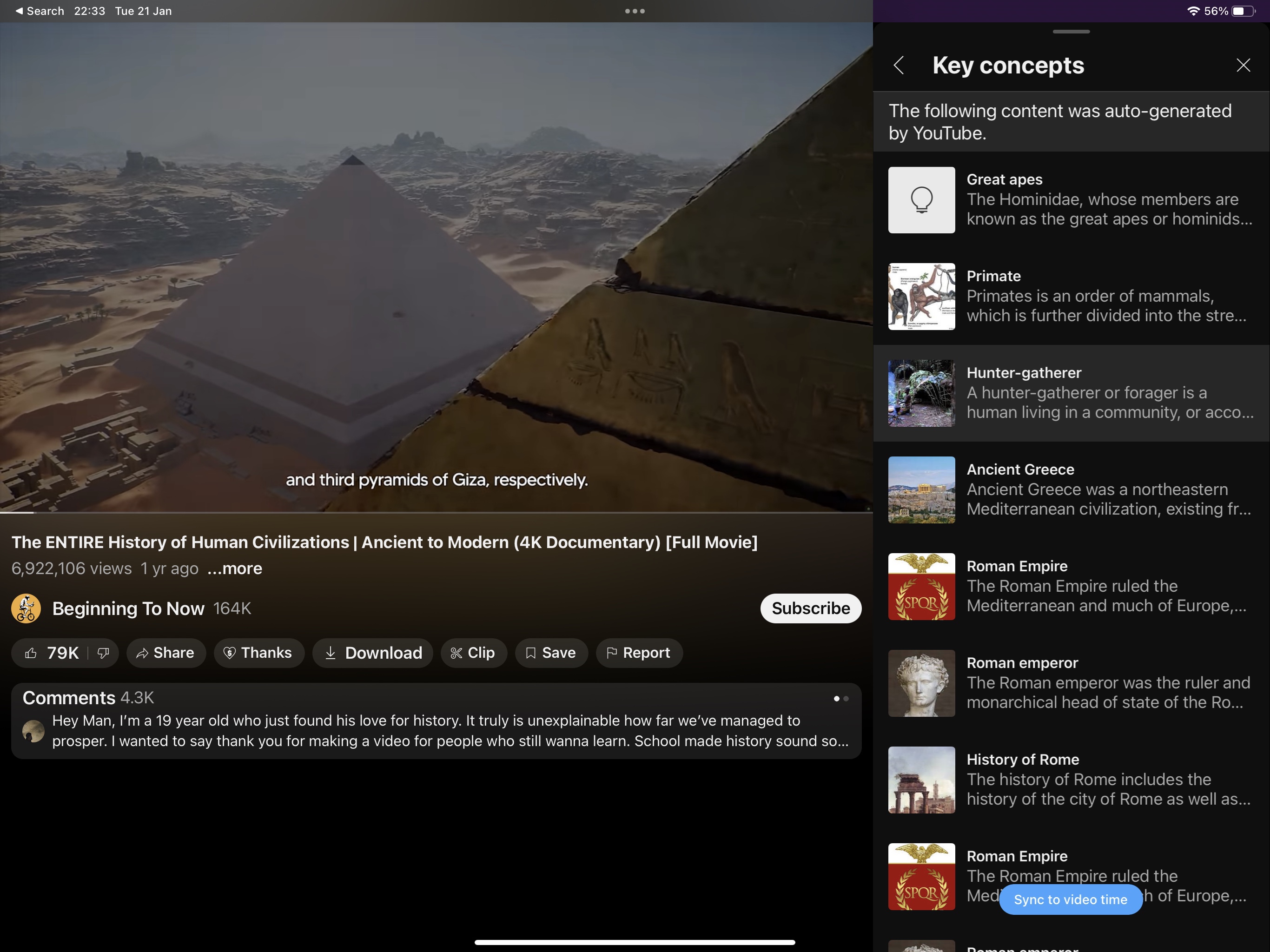

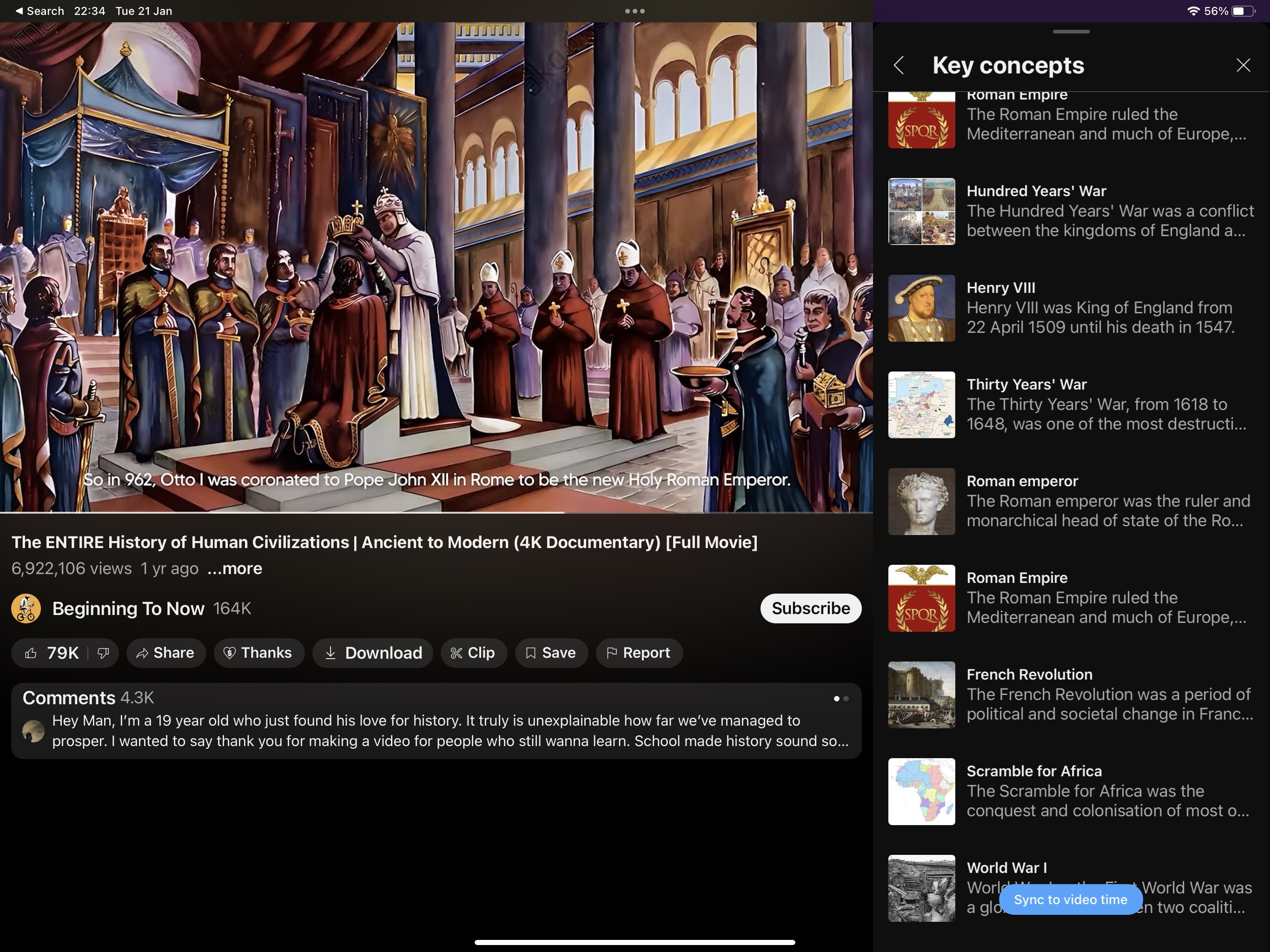
History of the Entire World ( Ancient,Medival ,Modern ) World History
History of the World attempts to tell the story of humans from Prehistoric times, through the Ancient Period, Middle Ages, and Modern History in a concise movie. It’s meant for people who want to have a basic understanding of the major events of human history.
Human history, or world history, is the narrative of humanity’s past. It is understood through archaeology, anthropology, genetics, and linguistics, and since the advent of writing, from primary and secondary sources.
Humanity’s written history was preceded by its prehistory, beginning with the Palaeolithic Era (“Old Stone Age”), followed by the Neolithic Era (“New Stone Age”). The Neolithic saw the Agricultural Revolution begin, between 10,000 and 5000 BCE, in the Near East’s Fertile Crescent. During this period, humans began the systematic husbandry of plants and animals. As agriculture advanced, most humans transitioned from a nomadic to a settled lifestyle as farmers in permanent settlements. The relative security and increased productivity provided by farming allowed communities to expand into increasingly larger units, fostered by advances in transportation
Whether in prehistoric or historic times, people always needed to be near reliable sources of drinking water. Settlements developed as early as 4,000 BCE in Iran, in Mesopotamia, in the Indus River valley on the Indian subcontinent, on the banks of Egypt’s Nile River, and along China’s rivers. As farming developed, grain agriculture became more sophisticated and prompted a division of labour to store food between growing seasons. Labour divisions led to the rise of a leisured upper class and the development of cities, which provided the foundation for civilization. The growing complexity of human societies necessitated systems of accounting and writing. Hinduism developed in the late Bronze Age on the Indian subcontinent. The Axial Age witnessed the introduction of religions such as Buddhism, Taoism, Confucianism, and Jainism
With civilizations flourishing, ancient history (“Antiquity,” including the Classical Age and Golden Age of India, up to about 500 CE) saw the rise and fall of empires. Post-classical history (the “Middle Ages,” c. 500–1500 CE,) witnessed the rise of Christianity, the Islamic Golden Age (c. 750 CE – c. 1258 CE), and the Timurid and Italian Renaissances (from around 1300 CE). The mid-15th-century introduction of movable-type printing in Europe revolutionized communication and facilitated ever wider dissemination of information, hastening the end of the Middle Ages and ushering in the Scientific Revolution. The early modern period, sometimes referred to as the “European Age and Age of the Islamic Gunpowders”, from about 1500 to 1800, included the Age of Discovery and the Age of Enlightenment. By the 18th century, the accumulation of knowledge and technology had reached a critical mass that brought about the Industrial Revolution and began the late modern period, which started around 1800 and has continued through the present
This scheme of historical periodization (dividing history into Antiquity, Post-Classical, Early Modern, and Late Modern periods) was developed for, and applies best to, the history of the Old World, particularly Europe and the Mediterranean. Outside this region, including ancient China and ancient India, historical timelines unfolded differently. However, by the 18th century, due to extensive world trade and colonization, the histories of most civilizations had become substantially intertwined, a process known as globalization. In the last quarter-millennium, the rates of growth of population, knowledge, technology, communications, commerce, weapon destructiveness, and environmental degradation have greatly accelerated, creating unprecedented opportunities and perils that now confront the planet’s human communities
The Entire History of China / Ancient to Modern / 4 K Documentary
The land of China was once shrouded in mystery to the rest of the ancient world.
The Silk Road was a connection between the two realms that suggested China to be of immense wealth and power.
However, expeditions from distant empires would fail to uncover the true scale of this hidden empire.
Whilst these civilizations would see dramatic falls, China would continue to rise through countless dynasties and emperors for thousands of years, forming the global superpower we know today.
From constructing the longest structure in the world, to hosting the largest and deadliest wars in mankind’s history, China is the longest continuous civilization on earth, dating back 5000 years – withstanding the ancient era, the middles ages, and now, the modern period.
But can they continue on?
To understand this fascinating land, we must start from the beginning.
The Real Impact of the Silk Road / Extra Long Historical Documentary
The Silk Road stands as one of humanity’s most transformative endeavors, connecting East and West across Eurasia for thousands of years. This documentary series examines its profound impact on history, shaping empires, spreading ideas, and revolutionizing civilizations. Today’s extra long history documentary explores how the Silk Road influenced conflicts, from cavalry tactics to the invention of gunpowder. It then reveals how the route became a conduit for both life and disease, reshaping societies. Finally, it uncovers the pivotal role of Silk Road trade in driving the Age of Revolutions and shaping the modern world.
 မှတ်ဖွယ်မှတ်ရာ စာပဒေသာ