
Big Bodies Are Real . Here is What You Should Know
Why was an ancient Irish king ritually sacrificed by his own people and then left in a bog for two thousand years? The violent truth about bog bodies is shocking.
Ancient #Ritual #Body
Understanding bogs | 0:00
Why bogs? | 1:06
The Old Croghan Man | 2:03
The Lindow Moss bodies | 3:05
Ancient hygiene | 3:59
The Grauballe Man | 4:44
The Tollund Man | 5:38
The Cashel Man | 6:22
Met with a terrible fate | 7:09
Bog theories | 8:08
The victims | 9:08
Modern bog bodies | 10:07
Voiceover By: Tim Bensch
Read Full Article: https://www.grunge.com/333860/th..
Iron Age peat bog body found in Northern Ireland is well over 2000 years old -25/Jan/2024
Unravelling the mystery of Northern Ireland’s ‘bog body’: Remains uncovered in wetlands are from a teenage boy who died 2,500 years ago, scientists say.
Archeologists have found a rare ‘bog body’ preserved in peatland for more than 2,000 years.
The skeleton was found about three feet (one metre) below the surface of government-owned land in Bellaghy, a village in County Londonderry, Northern Ireland.
Described as ‘well preserved’ but not totally intact, the bones were found with partial skin, fingernails of the left hand, toenails and even what’s thought to be a kidney.
They remains all belonged to the same person – believed to be a male aged between 13 to 17 years of age at the time of death.
Bog bodies like this are so-called because they’ve been amazingly well-preserved by the natural oxygen-free conditions of a peat bog.
World’s oldest mummified bog body found in Europe
have unearthed the remains of a 4,000-year-old man preserved in an Irish peat bog, marking the oldest European bog body ever found with skin still intact.
The cool, waterlogged conditions of Northern European bogs (a type of wetland) create low-oxygen, highly acidic environments ideal for body preservation. As a result, hundreds of “bog bodies” dating back thousands of years have been uncovered in the region, but many have shriveled down to mostly skeletons and tend to be closer to 2,000 years old.
A resident of central Ireland’s County Laois came across the well-preserved “Cashel Man” — named for the bog he was found in — while milling for peat moss, which is used for a variety of farm purposes, including animal-bedding and field conditioning. [See Images of Cashel Man & Other Bog Bodies]
Having realized that he had come across a human body, the resident notified archaeologists at the National Museum of Ireland, who later conducted a formal excavation of the site. A summary of the dig appeared in the latest edition of the Irish journal Ossory, Laois, and Leinster.
“All that was visible to start with was a pair of legs below the knees, and a torso,” Eamonn Kelly, an archaeologist at the National Museum and lead excavator of the project, wrote in the report. “The body appeared to be naked. Later, it was possible to work out that the torso had been damaged by the milling machine, which also removed the head, neck and left arm.”
The team calculated the age of the body using radiometric carbon dating, in which the constant decay rate of radioactive carbon-14 is used to estimate age based on remaining levels of carbon-14 in the dead tissues. Surprised to find the body was roughly 4,000 years old, the team dated the peat above and below the body to confirm the results, and came up with about the same age. Previously, the oldest bog body ever found in Ireland was 1,300 years old, according to the Irish Times.
The team conducted computed tomography (CT) scans of the body after the dig, and found that the young man’s arm and spine had been broken multiple times, seemingly from sharp blows before his death.
The researchers also found cuts along the man’s back that looked like ax wounds. They uncovered axes capable of producing such wounds within the vicinity of the site.
Given this evidence of brutality, the team concluded that the young man had been killed in a ritual sacrifice, a practice commonly known in later eras, but not well documented in the Early Bronze Age of 2000 B.C., about the time this bog body would’ve lived.
All the indications are that the human remains from Cashel Bog tell of the fate of a young king who, through folly or misadventure, was deemed to have failed to appease the goddess on whose benevolence his people depended, and who paid the ultimate price,” Kelly wrote.
The international anthropology community has also taken note of the significance of this finding.
“This is really quite special,” said Glen Doran, an anthropology professor at Florida State University who studies remains from North American bogs and was not involved in the study.
Any remains preserved as well as Cashel Man provide important opportunities to study past cultures, but Cashel Man’s unusually old age makes him a particularly fruitful find. “There are fewer places that have deposits of that age, so when you find them, they represent very. remarkable windows into the past,” Doran said.
The Fascinating Story of Old Croghan Man : Ireland’s Mummified Bog Body
Old Croghan Man is a well-preserved bog body from the Iron Age, discovered in Ireland in 2003. The body, which belonged to a young man in his mid-20s, had several cuts and a noose around the neck, leading experts to speculate that he may have suffered a violent attack or been sacrificed. The low oxygen and acidic conditions in the bog helped to mummify the body, preserving skin, hair, and internal organs. Old Croghan Man’s discovery has provided valuable insights into the lives of the ancient Celts in Ireland, and his body is now on display at the National Museum of Ireland in Dublin.
remarkable windows into the past,” Doran said.
The Tollund Man : The World’s Most Famous Bog Body
Go to https://curiositystream.thld.co/… for unlimited access to the world’s top documentaries and nonfiction series. Use promo code BIOGRAPHICS to get your first 30 days, completely free!
→ Subscribe for new videos at least twice a week!
https://www.youtube.com/c/biogra…
Love content? Check out Simon’s other YouTube Channels:
European Mummy brought back to LIFE. ( Tollund Man Bog Body)
The 3,000 Year-Old Girl Buried In An Oak Coffin / Egtved Girl /Timeline
The Egtved Girl is one of the best-known figures from prehistory. One summer’s day in 1370 BC she was buried in an oak coffin that was covered by the barrow Storehøj near Egtved, west of Vejle. Although not much is left of the Egtved Girl, her tale is a captivating story of the Bronze Age people.
📺 It’s like Netflix for history… Sign up to History Hit, the world’s best history documentary service and get 50% off using the code ‘TIMELINE’ http://bit.ly/3a7ambu
Bog Queen သစ်ပုတ်မြေ က မိန်းကလေး ရုပ်ကြွင်း
Human body found in peat land dated back 490 BC in Ireland.
အိုင်ယာလန်နိုင်ငံ မုာခရစ်မပေါ်မီ နုစ်ငါးရာခန့်ကမံမီ လူရုပ်ကြွင်းကို သစ်ဆွေးမြေ bog land ထဲက တွေ့တာပါ၊
မီးသွေးကဲ့သို့ မဲနေပေမယ့် ခန်ဓါကိုယ် အစိတ်အပိုင်း တော်တော်များများ မပျက်စီးသေးဘဲcarbon 14 ကာဗွန် ၁၄နည်းနဲ့ သက်တမ်းတွက်ထားတာပါ၊
နုစ်သန်းပေါင်းကြာသွားရင် လူ ကျောက်ဖြစ်ရုပ်ကြွင်းဖြစ်သွားမုာ၊အဲ့ဒီကျရင် Geologists တွေ palaeontologists တွေ လေ့လာကြပြီး မျိုးစိတ်species တွေ အတိတ်ပတ်ဝန်းကျင်တွေ လေ့လာကြဦးမယ်၊ ငြင်းကြဦး မုာ၊ လို့ ကြံကြံဖန်ဖန် တွေးမိရင်း Geological Society of London ရဲ့ linkလေးကို အောက်မုာ ရေးထားပါတယ်၊ ဆောင်းပါးလေး နဲ့ အထဲမုာရေးထားတဲ့ ကဗျာလေး ဖတ်ကြည့်ရင်း၊သူဟာ ဘာကြောင့် သေသွားရတာလည်း၊ လည်ပင်းမုာလဲ ကြိုးတန်းလန်းနဲ့၊ အသတ်ခံရတာလား၊ ကိုယ့်ကိုယ်ကို သတ်သေတာလား၊ ဘာကြောင့်၊သစ်ဆွေးမြေထဲ၊ရောက်နေရတာလည်း၊ ရေကန်ထဲ၊ lake deposits တွေထဲမုာ နုစ်ပေါင်းများစွာ နစ်မြုပ်နေရတာလည်း၊ နောင်တချိန် Geoforensic လိုဘာသာတွေ ထွန်းကားလာပြီး၊ လေ့လာကြမုာ၊
တကယ်တော့ သတ်တဝါ တိုင်းဟာ သေခြင်းဆိုတဲ့ တရားနဲ့ အမြဲရင်ဆိုင်တွေ့ကြုံနေရမုာပဲဆိုတာတွေးမိရင်း၊ ဘူမိဗေဒမုာလည်း ရူတတ်ရင် တရားရစရာတွေ အများကြီးရိုပါတယ်၊ အသေမဦးခင် ညာဏ်ဦးနိုင်အောင်ကြိုးစားရဦးမုာပါလားလို့ ဆင်ခြင်မိပါတယ်၊
လေးစားစွာဖြင့်
ကြည်ခင်
၁၇-၀၁-၂၀၁၉


HISTORY
The Crazy History Of Bog Bodies
BY DB KELLYUPDATED: Updated FEB. 1, 2023 3:47 PM EST
Tim Graham/Getty Images
History is a weird thing, and it comes with an odd sort of distance. We know, for example, our ancient ancestors were hunter-gatherers, we know they were experimenting with keeping these cool creatures called dogs at their sides, and we know they died in some pretty terrible ways. We know all that, but it’s still tough to relate to ancient people in the way we might relate to, say, a grandparent.
Now, let’s talk about the strange phenomena that are bog bodies. Bog bodies are embalmed in a mummification process similar to what’s seen in Egyptian mummies, but the unique environment these ancient people were left in preserves them in even greater detail, and it serves to make them real in a strangely unsettling way.
Archaeologists have discovered bog bodies that are still wearing the perfectly preserved clothing they died in, while others still sport distinctive hairstyles or signs of the rituals they had participated in before they died. Sustainable Nano notes some have even been discovered with stomachs that still contain what’s left of their last meal, and these unique bodies have given an unprecedented look into what it was really, truly like to live — and die — hundreds if not thousands of years ago. Let’s talk about how these bodies were preserved, what secrets they’ve revealed, and who they may have been in life.
What are bogs, and how do they preserve bodies so well?

Shutterstock
When it comes time for humans to shuffle off this mortal coil, human bodies aren’t really all that durable. In most cases, there’s not much left after just 50 years, and here’s where bogs come in. Bogs are a very specific sort of environment, and National Geographic describes them as happening when a lake gets filled in with plant material that’s in a constant state of decay. They’re low in nutrients and oxygen but they’re highly acidic, and it’s this environment that allows for the chemical reaction that needs to occur in order to naturally preserve a dead body.
According to the National Museum of Denmark, not every body that ends up deposited in bogs is preserved. In order for the body to be exposed to the microbial activity that kick-starts preservation, the body needs to be buried and completely covered while it’s still fresh. It also needs to be deposited in the cold weather, which halts decay.
Bog bodies are preserved, but that doesn’t mean they’re completely unchanged. The BBC says the chemical process — which some researchers describe as similar to “slow-cooking” — turns the person’s skin dark brown and leathery. Even stranger, it also turns every hair color to red, meaning even though bog bodies have given up countless secrets, their original hair color isn’t one of them.

Why bogs?
Shutterstock
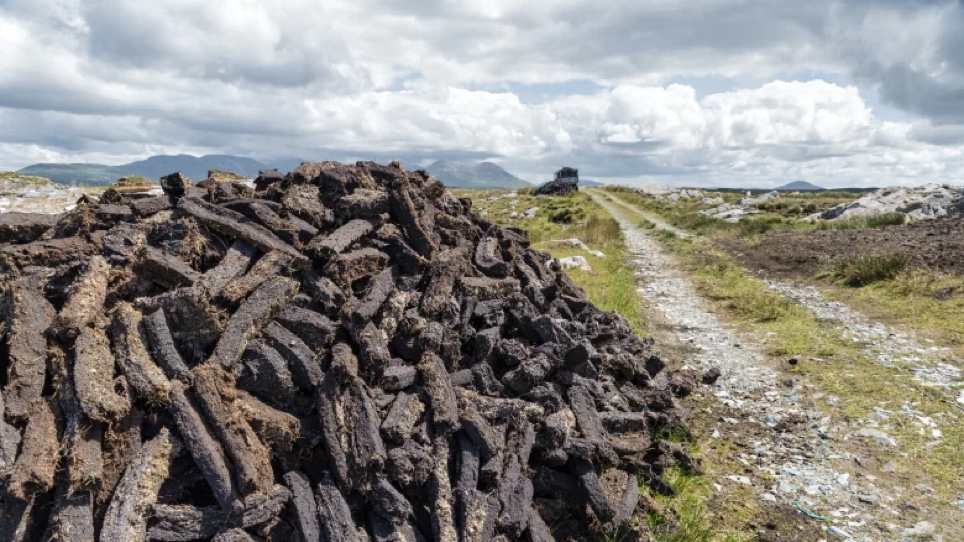
Bog bodies, says the National Museum of Denmark, aren’t entirely accidental. While it’s possible some simply happened to die in the right place at the right time to be preserved, other bodies were put there on purpose, tied up and staked in place. Why on earth would that be a thing? Well, bogs aren’t just useless patches of very wet land — for thousands of years, they’ve been an invaluable source of turf. That’s still used as fuel in many countries, and ancient people would have also used it as a building material. That alone made it incredibly important to a community’s survival, and it was a bit more than that, too.
In some areas, bogs were seen as a mysterious place, where the veil between the human and the divine was thin. Scores of offerings have been recovered from bogs, and include things like jewelry, pottery, tools, and the remains of sacrificed animals. Bogs, adds the Smithsonian, were eerie places long thought to be home to ghostly creatures seen dancing across the open expanse of boggy land. Today, we know that’s caused by bursts of gas, but it’s still surreal enough that it’s easy to see why ancient people would have been enraptured.
It’s not clear just why bog bodies would have been buried there, but clearly, they knew bogs were special places… even if they didn’t know they were preserving their friends and relatives for us to find hundreds of years later.
The Old Croghan Man
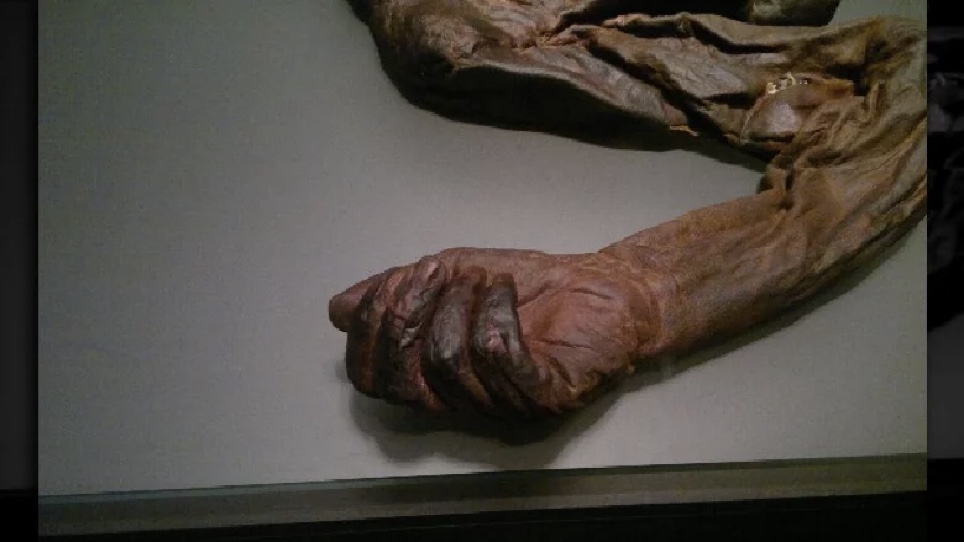
Mark Healey
According to the Smithsonian, the first actual record of a bog body being discovered comes from all the way back in the 17th century. Some are extraordinary in their nearly lifelike appearance, like the body named the Old Croghan Man. He was found in Co. Offaly in Ireland, not far from Ui Failge, a site linked to the crowning of ancient kings. And that’s important: Archaeologists suggest he was likely a king himself.
The Old Croghan Man was exquisitely preserved, but only from his neck to his waist. He lived sometime between 362 and 175 BC, and he stood around six and a half feet tall. He was discovered with an amulet depicting the sun — a symbol of kingship — and he also had another symbol of the sun and kingship removed before or at his death: his nipples. (The nipples of a king were thought to represent the sun and, in turn, life, so to remove them was to remove his royal status.)
He also died badly: he had holes bored through his arms and was restrained with stakes, then was strangled, stabbed, and drowned. According to The National Museum of Ireland’s Eamonn Kelly, the three methods were likely a reference to the three aspects of the goddess the sacrifice was dedicated to: fertility, war/death, and sovereignty. When things got tough it was often the king who sacrificed his life in hopes of saving his people.
How the Lindow Moss bodies solved a recent murder
Print Collector/Getty Images
According to The Irish Times, one bog body discovered in Co. Laois had land owners calling the police in the belief they’d just dug up a fresh corpse. In another case, the discovery of a bog body helped catch a murderer. The Science History Institute says that in the 1980s, mill workers cutting peat for compost found a skull in the Lindow Moss bogs. Law enforcement was called, and it just so happened that only a stone’s throw from where the skull had been discovered was the home of a “person of interest.” Police were pretty sure Peter Reyn-Bardt had done something horrible to his wife, but without a body, they hadn’t been able to do anything about it. Now, it seemed, they had a skull.
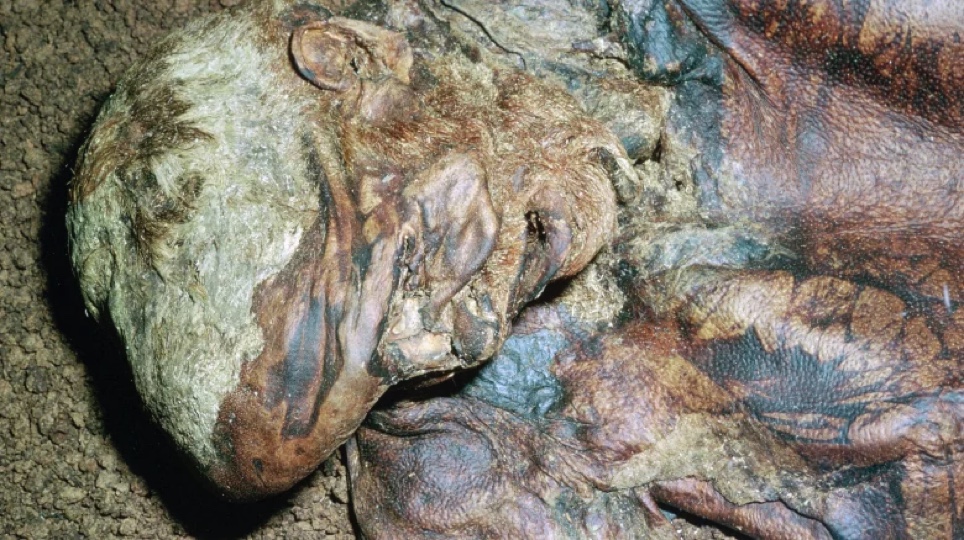
his wife, but without a body, they hadn’t been able to do anything about it. Now, it seemed, they had a skull.
Confronted with the remains, Reyn-Bardt confessed to killing and dismembering his wife, then scattering what was left of her in the nearby bogs. It was only at his trial that Oxford University scientists revealed the skull actually dated back to Roman-era Britain, but thanks to his confession, he was sentenced to life in prison.
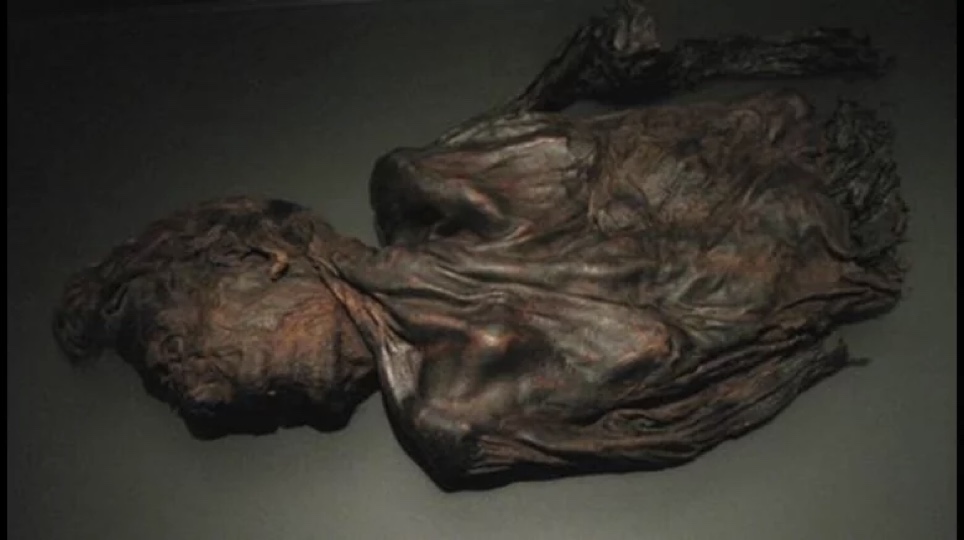
Wikipedia
The skull wouldn’t be the only find to come out of the area, and just a year later, workers unearthed what they first believed to be the rest of the missing wife. It wasn’t Malika de Fernandez but instead, it was one of the most well-preserved bog bodies ever discovered: The Lindow Man (pictured).
Bog bodies have led to some surprising findings about ancient hygiene
It might be tempting to think our ancient ancestors were probably just filthy dirtballs, but strangely, bog bodies have yielded some pretty neat clues about ancient hygiene. Take the Old Croghan Man, our kingly friend from Co. Offaly. What remained of him — his torso — was so well preserved that not only did the police first open a murder investigation, but National Geographic says they were even able to take his fingerprints. They were also able to tell that they weren’t the rough hands of someone who had struggled through a lifetime of manual labor. They were quite the opposite, in fact, and researchers noted his fingernails were “very well manicured.”
Then, there’s the Clonycavan Man (pictured) from Co. Meath, Ireland. When he was discovered, he still sported his perfectly styled hair, and University of York scientists confirmed he’d used a bit of product to get his fancy ‘do: it was a mix of pine resin and vegetable plant oil, some of which had been imported from either Spain or France.
It wasn’t just the men of ancient Ireland who liked to keep themselves spiffed up. Ancient History says when the Osterby Man was discovered in a German peat bog, he still had his circa year 100 hairstyle. The elaborate do is called a Suebian knot, and it’s still perfectly held in hair turned red by the bogs.
The discovery of the Grauballe Man

Wikipedia
The Grauballe Man is widely considered to be one of the best-preserved of all bog bodies. He was found in 1952 by a peat-cutter working in a bog in Denmark, who recalled (via the Moesgaard Museum): “… it was a Saturday morning. I stood on the shovel and it wobbled like a rubber ball. … There was the head so fine. I had to get down on my knees to see if it really was a human head. Then I realized it really was.”
There’re no details about how absolutely terrifying that must have been, but when it comes to the Grauballe Man himself, there’s a ton of details. He lived somewhere around 390 BC, and his short hair was perfectly preserved, along with the two weeks’ worth of beard stubble he was sporting when he died. Even his facial features were very clearly still twisted in a grimace, and it’s no wonder: He died terribly, with his leg broken and his throat cut. Up until then, though, he’d been pretty healthy… aside from a few dental issues and a case of worms, which were still preserved in his digestive tract.
Those most familiar with the man — who’s now a permanent exhibition at the Moesgaard Museum — believe he was killed and placed in the bog as a human sacrifice, likely an offering to the gods that was presented to them in the hopes of gaining their favor.
Preserving the Tollund Man

Wikipedia
Removing a bog body from the bog that preserved it comes with some difficulties. Water evaporates, after all, and once the body is removed it can start to deteriorate. According to Museum Silkeborg, the Tollund Man isn’t just notable for the incredible detail seen in his face and head, he also represents the first time scientists were able to successfully preserve part of a body. And they’d been trying for a long time: in the 19th century, smoking the bodies — just like you’d smoke, say, a pork shoulder — was the go-to method, but it also led to the corpse shrinking and losing much of the detail.
The Tollund Man was discovered in 1950, and — like many bog bodies — he was a police matter, before he was handed over to the museum where he now resides. While parts of his body had been lost or not particularly well preserved, his head was almost pristine. His peaceful expression was a bit deceiving: He died dangling at the end of a hangman’s rope, the noose still around his neck.
Ultimately, it was his head that they preserved, by first soaking the head in a series of liquids until finally placing it in beeswax, which was absorbed into the individual cells. The successful experiment was unveiled just before Christmas day in 1951, when scientists removed him from his casserole dish, wiped off the extra wax, and found their experiment a success.
The oldest bog body ever found
Shutterstock

It’s one thing to talk about someone who lived in the Victorian era, or even a few hundred years ago. Sure, it might be hard to imagine the world as it was then, but it’s possible. Go back to the lifetime of the world’s oldest bog body, though, and that’s something else entirely. According to The Irish Times, the 2011 discovery of a bog body dubbed the Cashel Man is the oldest ever found: Radiocarbon dating put the young man’s age at around 4,000 years. Give or take.
For some idea of what else was going on in 2000 BC, when the Cashel Man was still alive and well, let’s put it this way: History Central says this was the same time the Babylonians were inventing their mathematical system, the Minoans were at their height, and King Tut was still about 700 years into the future.
Unfortunately, the body had been damaged by the same peat milling machine that had uncovered it, limiting how much archaeologists have been able to determine about how the man died. Still, it’s believed the Cashel Man is proof of kingship rituals dating back to the Early Bronze Age, and according to the National Museum of Ireland, it’s likely he met his untimely end as part of a ritual sacrifice.
The majority of bog bodies died horrific deaths
Wikipedia
Buckle up, because this is going to get grisly for a minute. In many cases, bog bodies are so well-preserved that archaeologists have been able to determine just how these ancient people met their end. Disturbingly, the extreme overkill that the Old Croghan Man was subjected to — the staking, stabbing, strangling, and drowning — was kind of the norm, not the exception.
Take the Lindow Man. Ancient History says that while his precise cause of death is still debated, his body shows signs of multiple injuries, including a broken rib (suggesting he took a brutal hit to the back), a slit throat, and two savage injuries to the top of his head. The same sort of violence is seen in the remains of the Clonycavan Man: Archaeology says both the top of his skull and his face had been broken open with a blow from what was probably an ax.
The Moesgaard Museum’s Grauballe Man (pictured) seems to have been executed by a single slice to the throat, but the act was so violent that the knife blade — likely wielded by someone standing behind him, and leaning over him as he knelt — sliced through his neck, all arteries, and chipped his spine.
The theories about what happened to the bog bodies

Shutterstock
Archaeologists generally agree bogs were considered special, but there’s some debate about why they were buried there. In some cases — like the Old Croghan Man — it’s thought bodies represented a ritual offering to the gods. That’s the theory supported by British archaeologist Miranda Aldhouse-Green, who points to ancient Roman writings that describe instances of human sacrifice that were reported in the farthest reaches of the empire — the same areas bog bodies have been discovered. She also adds (via The Atlantic) that the presence of other offerings left in bogs seems to support that, but others aren’t so convinced.
For starters, researchers from the National Museum of Denmark found (via the Smithsonian) that analyzing the chemical makeup of the hair of some bog bodies suggests they had traveled a long, long way before being killed… and that’s a new bit of information that throws a wrench into old theories.
The Moesgaard Museum says there’s another theory that says bog bodies belonged to people executed for brutal crimes. Cited as evidence for that theory is the violence demonstrated in the killings, and ancient Roman writings that suggest some civilizations used bogs as the execution grounds. It’s also possible these were people who were seen as social outcasts for other reasons, but one thing seems for certain: while most of their ancient contemporaries were cremated, they were deliberately sent to a different end.
There’s a high rate of physical abnormalities found in bog bodies

Shutterstock
Miranda Aldhouse-Green is a British archaeologist involved in the study of bog bodies, and she told The Atlantic that not only did she believe the men, women, and children condemned to death and burial in the bogs were meant as human sacrifices, but that in her studies, she had noticed something many had in common: physical abnormalities. Identifying some of these abnormalities has been tough, because it can be hard to determine if damage to a bog body was done before or after death. Still, there’s enough evidence to be compelling.
It was his height — 6 ft. 6 inches — that set Ireland’s Old Croghan Man apart from his peers, says PBS. Then, there’s the Yde Girl. She lived in the Netherlands at some time between 100 BC and 50 AD, and was killed when she was about 16-years-old. Scans done on her remains revealed she had scoliosis, which some researchers think made her a target when it came time to choose someone to be sacrificed. Among the bog bodies discovered in the Netherlands was also the Zweeloo Woman, who had dwarfism (via ResearchGate).
Aldhouse-Green says there are other cases, too: she’s seen bog bodies with severe joint disease that would have impacted the person’s mobility, and another body with extra thumbs. She suspects this helps support her theory that they were ritual sacrifices, as they would have been (perhaps) thought to have special powers.
They’re not only ancient bodies
Peter Lindberg
Many bog bodies have been dated to the Iron Age and earlier, but that’s not always the case. In 1978, the Meenybraddan Woman was discovered in a bog in Ireland’s Co. Donegal, and according to PBS, she was wrapped in a woolen cloak that put her life and death at some time in the 16th century. It was so out of the ordinary that it’s believed she was either a murder victim disposed of in the bog — only to be uncovered four centuries later — or that she had gone there to commit suicide.

disposed of in the bog — only to be uncovered four centuries later — or that she had gone there to commit suicide.
Then, there’s the Bocksten Man (pictured). An article in Textile History says that he was discovered in 1936, and it’s believed he was a murder victim who was dumped in a peat bog in Sweden sometime in the 14th century. Why is a textile journal interested in a bog body? The body was still dressed in a cloak, hood, cote (or tunic), hose, and front-lacing shoes, making it one of the best surviving examples of medieval dress from that era.
Read More: https://www.grunge.com/333860/the-crazy-history-of-bog-bodies/
 မှတ်ဖွယ်မှတ်ရာ စာပဒေသာ