

Maldives Floating City
Maldives to build one of the world’s first floating cities as response to climate change
Up to 20,000 people will live in the new district and $250,000 homes could be on sale as early as 2024
Watch
Video
Maldives Floating City – Finalist Mipim Awards
The Maldives Floating City has been shortlisted for the MIPIM Awards, which is famously known as the “Oscars for Global Development”. The MIPIM Awards is regarded as the most prestigious award given on an international scale for development projects while MIPIM is a global real estate event, that is widely considered as the world’s leading such event. The Maldives’ floating city project was shortlisted under the “Best Future Mega Project” category from among 161 other such projects. This modern and innovative concept aims to provide housing for the locals as well as attract tourists.
View
Images


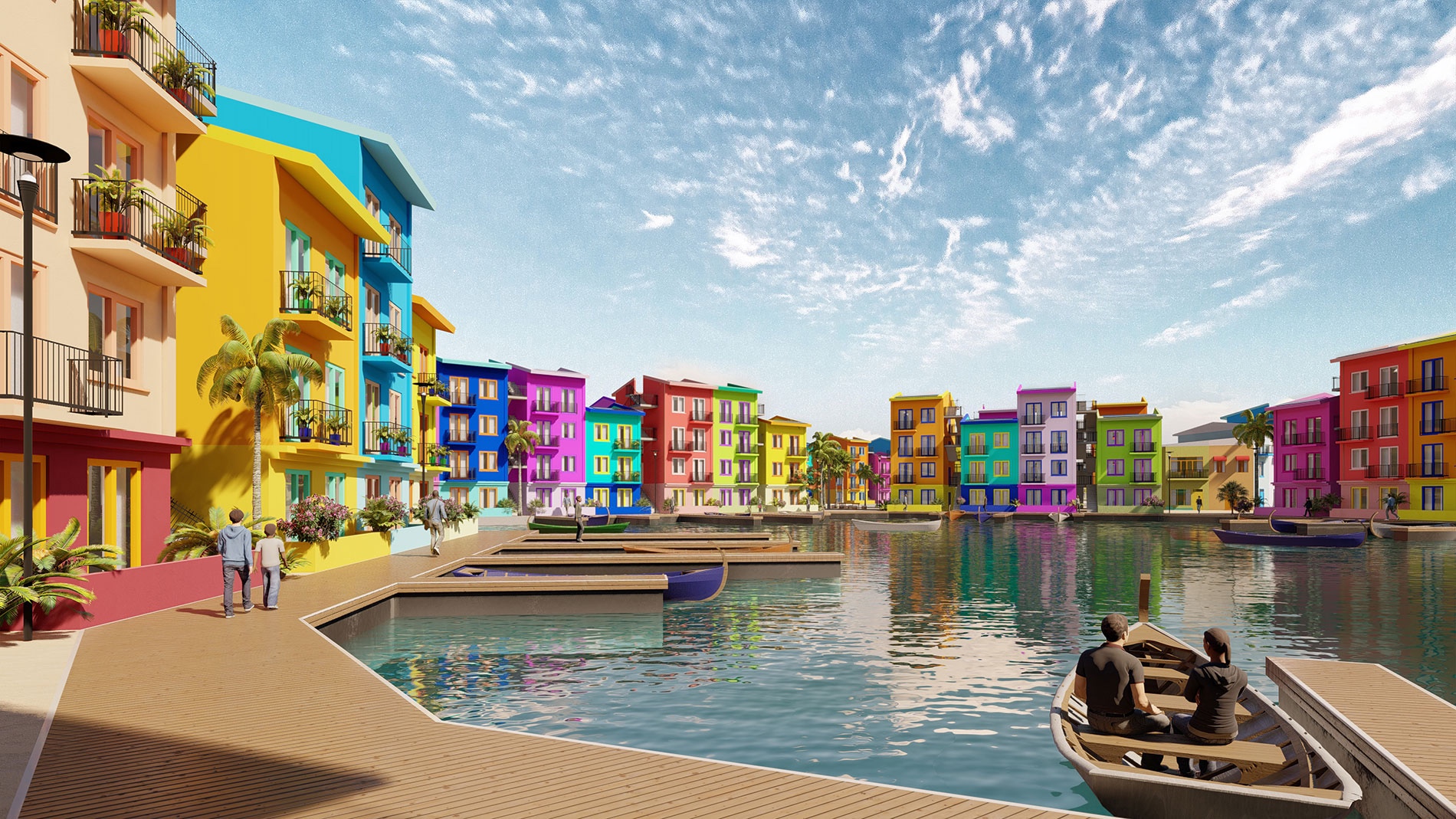

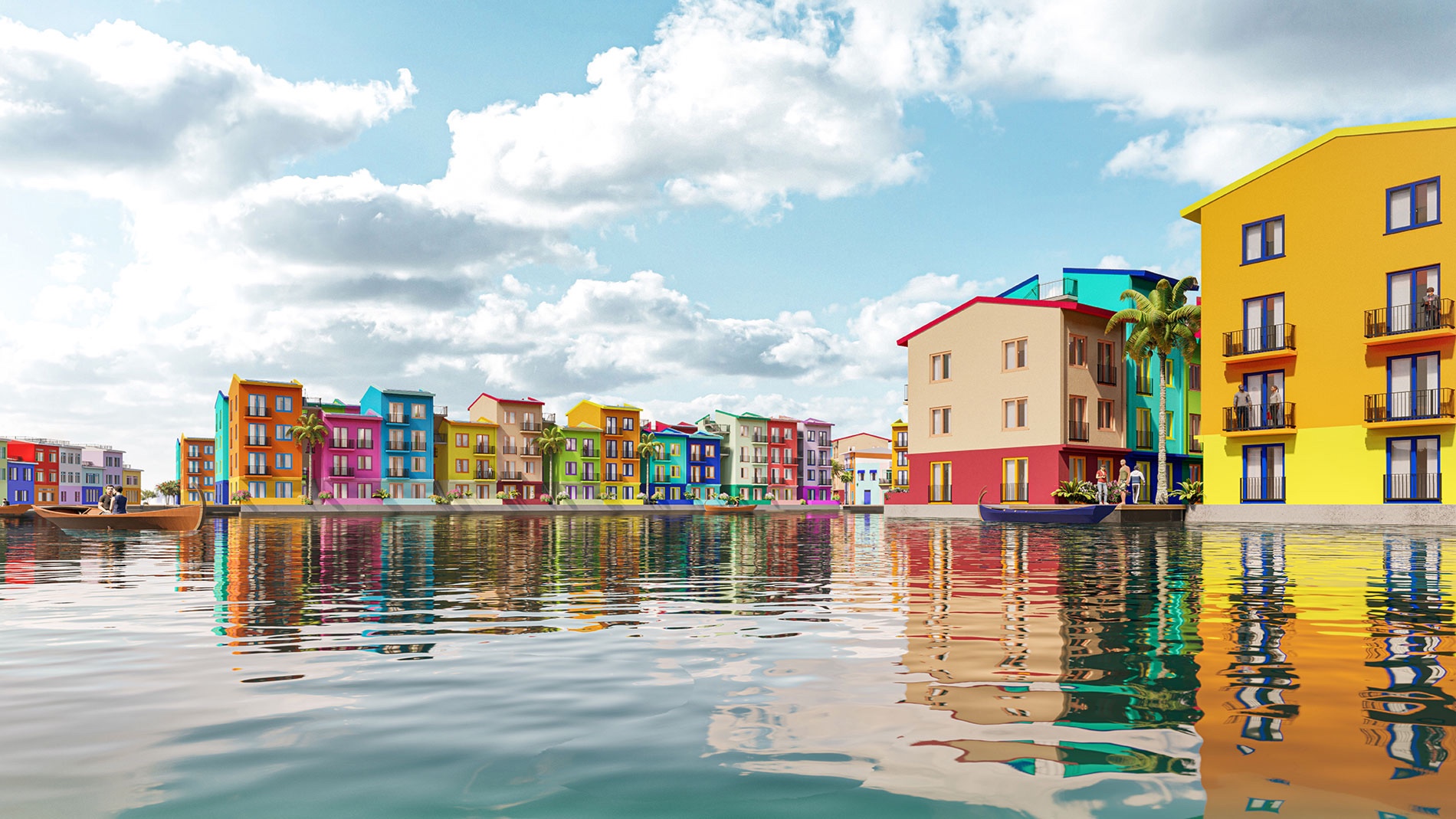
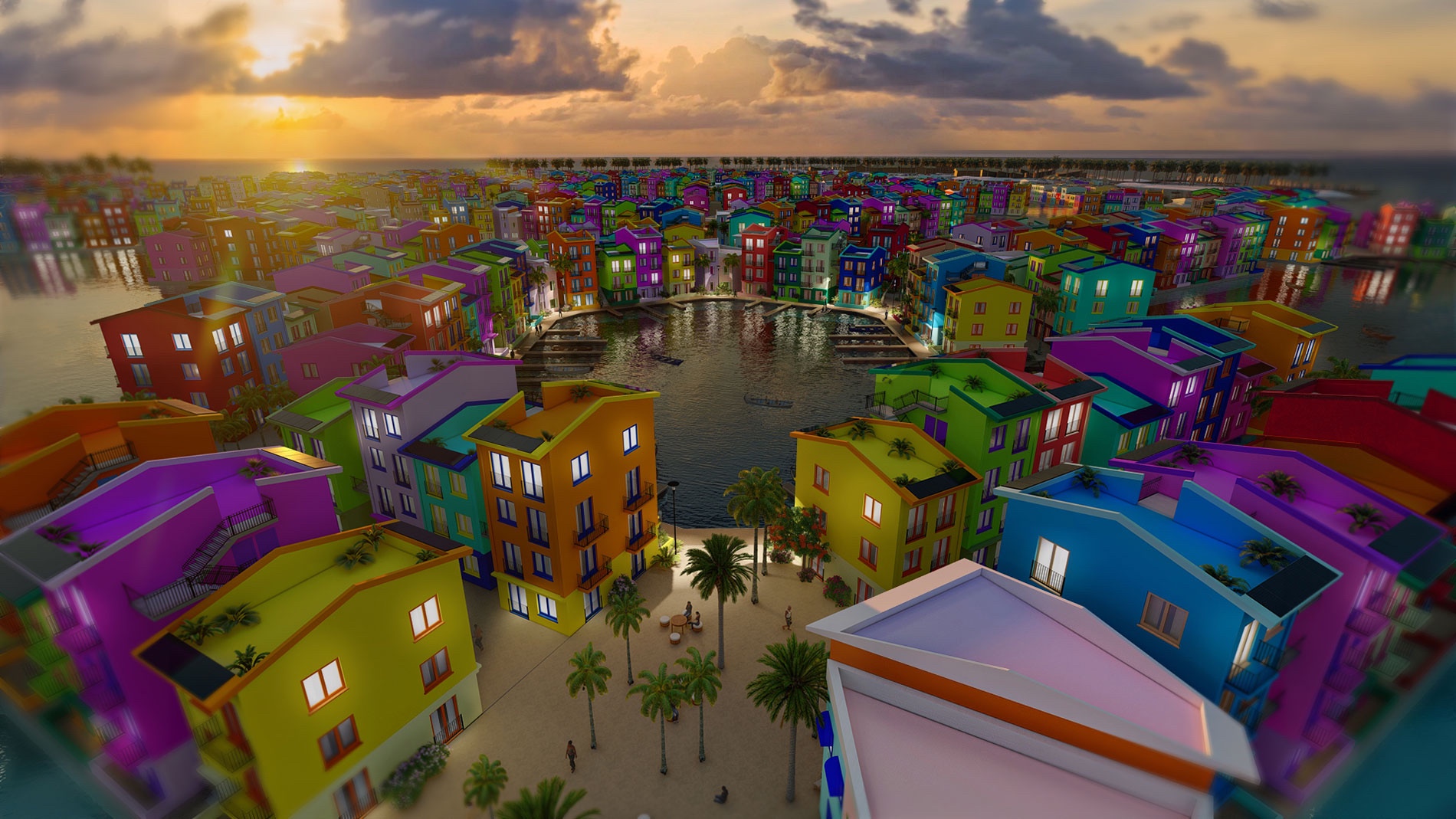

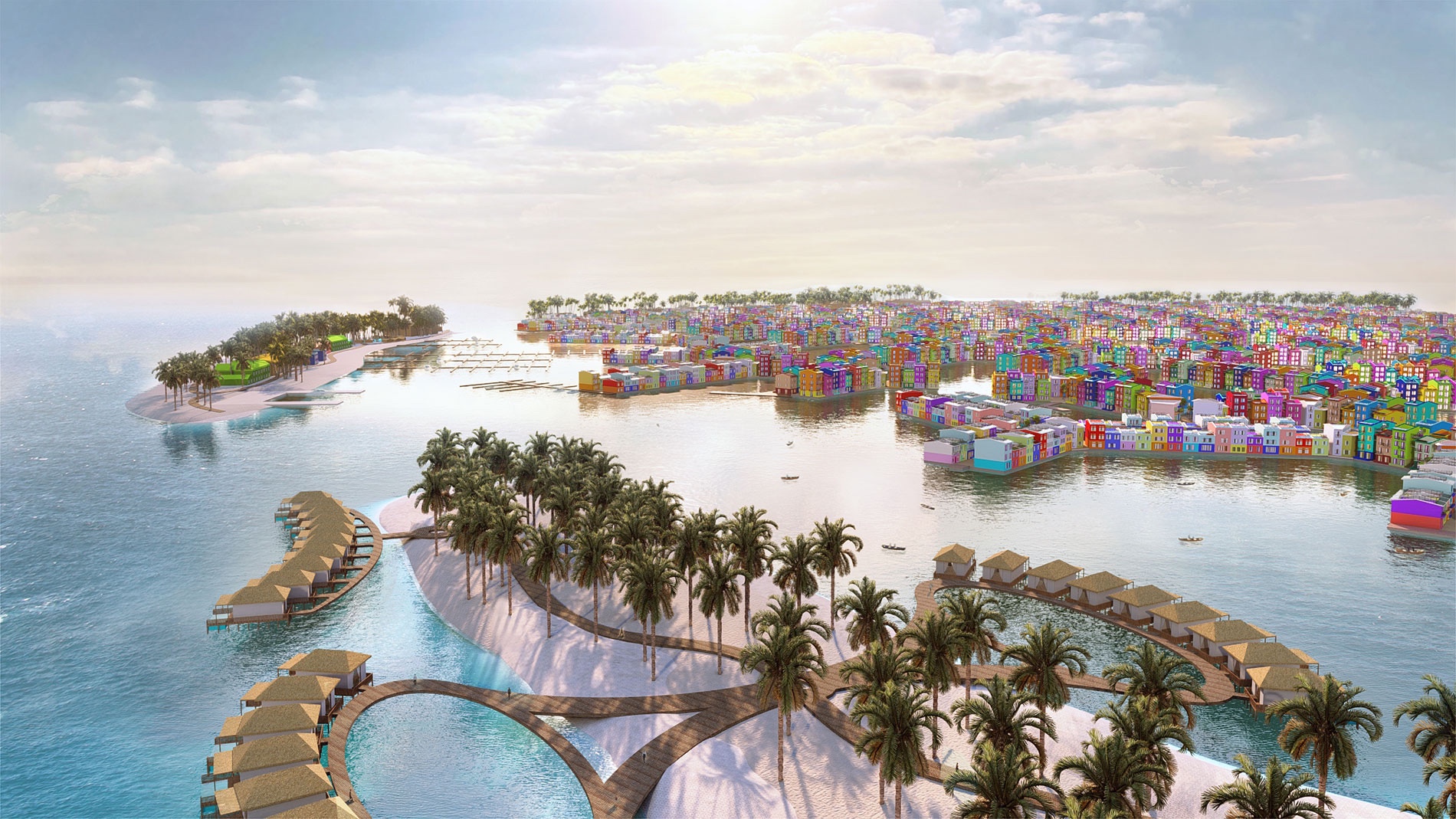
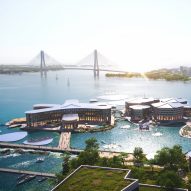
The design of Maldives Floating City is inspired by brain coral, a type of marine organism resembling the human brain. All photos: Waterstudio/Dutch Docklands Maldives
Jun 28, 2022
Listen In English
Listen in ArabicPowered by automated translation
The Maldives will soon be home to one of the world’s first floating cities.
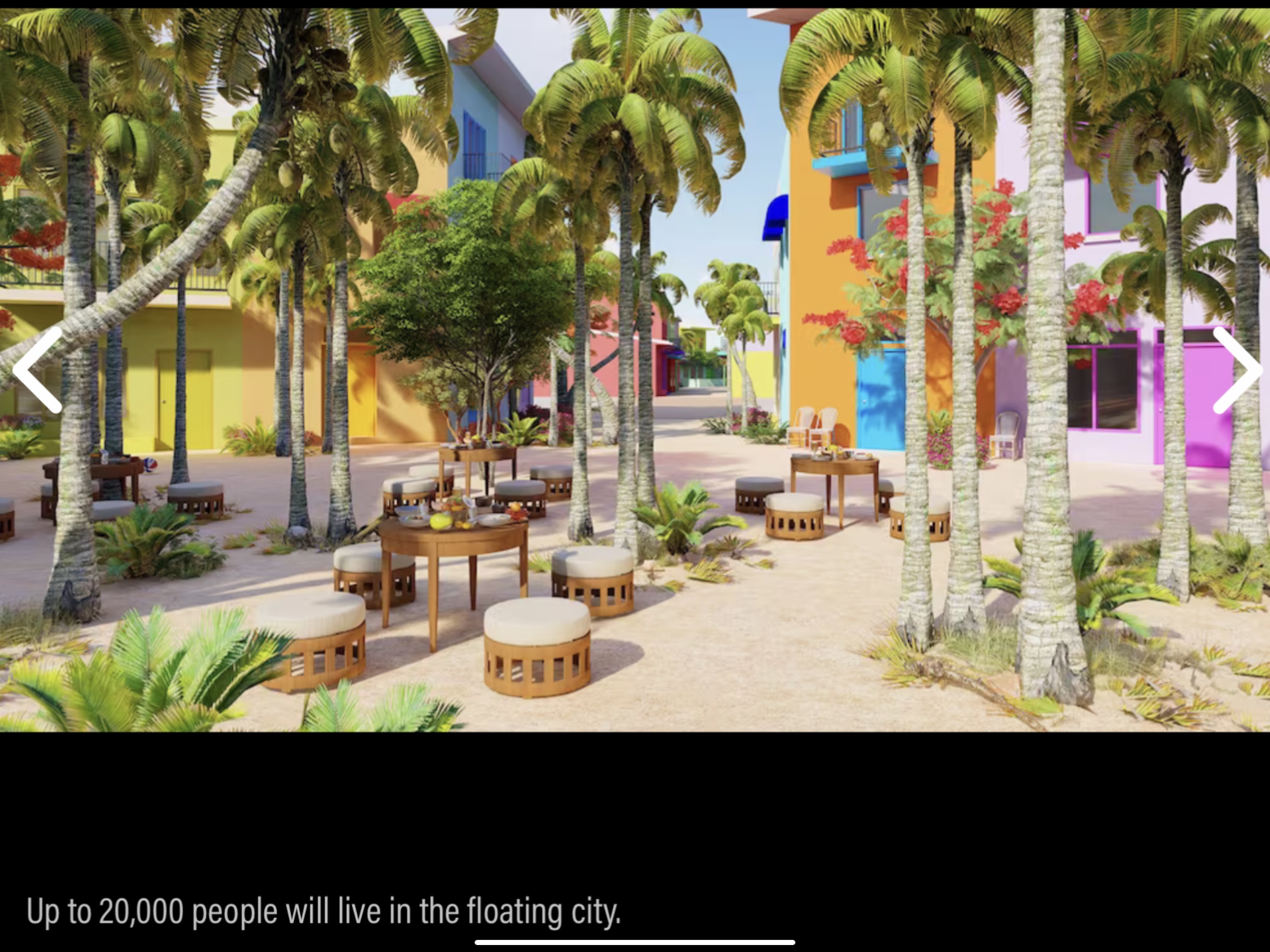
Set in a warm-water lagoon close to the capital, Male, the new district will feature thousands of waterfront residences built across a flexible, functional grid. Up to 20,000 people will inhabit the development, which will consist of a series of hexagonal-shaped floating structures.
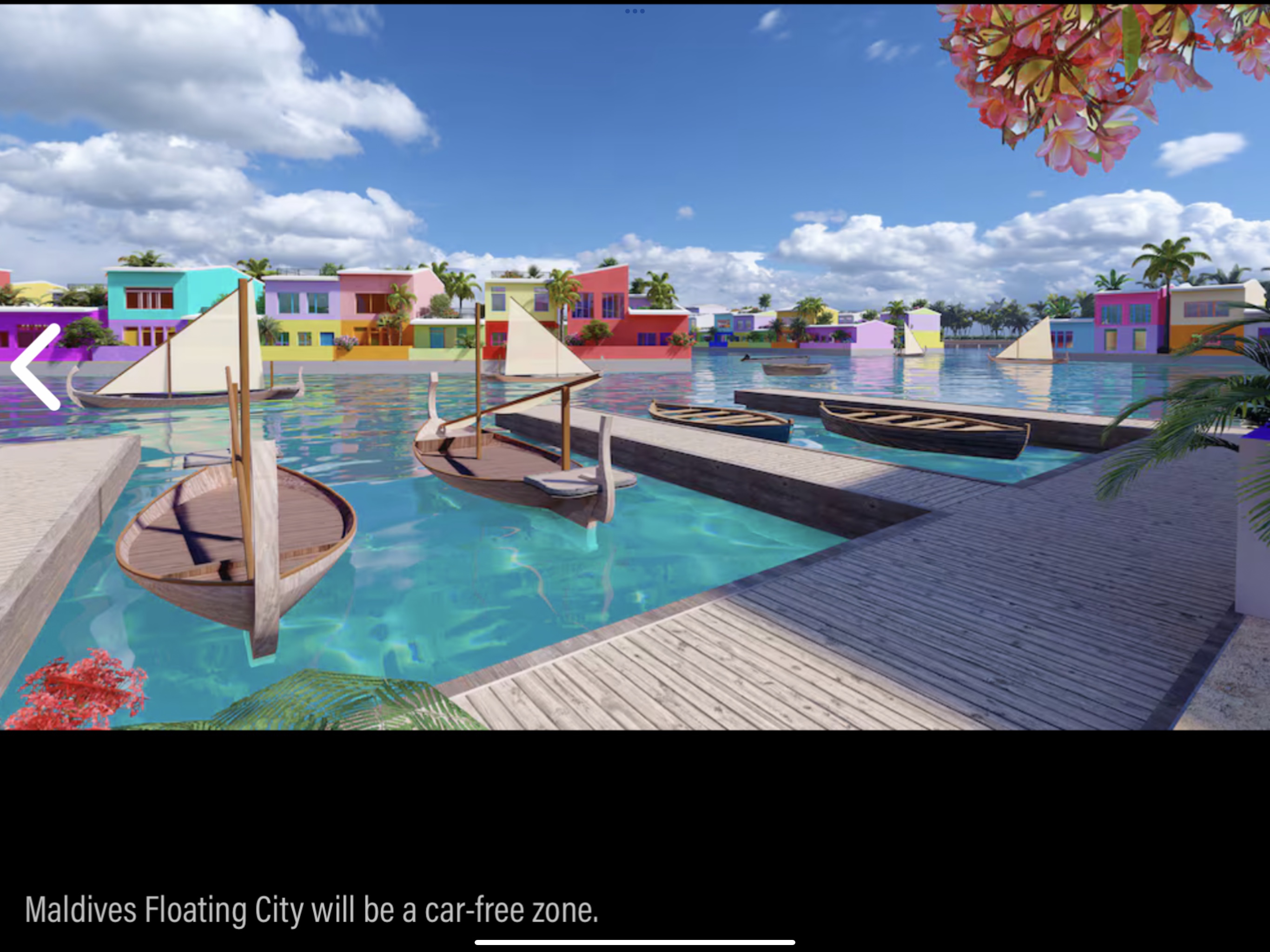
Inspired by traditional Maldivian seafaring culture, Maldives Floating City will also eventually be home to hotels, restaurants, boutiques and a world-class marina.
The project has been under research since 2009 and is due to be fully completed by 2027. It was conceptualised by Dutch architecture firm Waterstudio, in partnership with the government of the Maldives and Netherlands-based developer Dutch Docklands.
It is believed to be the first floating city in the world to be built as an island, with similar projects testing the waters in South Korea and the Netherlands. Smaller floating communities can also be seen around the globe from Peru to Vietnam.
Dubbed “a next-generation sea urban development” that can withstand rising sea levels, the island will be able to respond to the effects of climate change. It is particularly important given that 80 per cent of the Maldives sits less than one metre above sea level and it is predicted much of the archipelago will be uninhabitable by 2100 due to rising sea levels.

Each residence will measure 100 square metres and have its own jetty and roof terrace. Photo: Waterstudio/Dutch Docklands Maldives
Safety and stability are key considerations when it comes to creating a floating structure of this size. “Forces of nature, waves, extreme weather and sea-level rise for a 100-year prediction must be engineered in advance,” reads the Waterstudio website.
“Rigidity versus flexibility and a mooring system that can divert all the extreme forces are the base of a floating city design. Single-structure city foundations act as huge mega ships, which have to handle enormous forces. By dividing the city in elements these forces can be handled in a more effective way with minimal risks.”
The design is inspired by brain coral, a type of marine organism that, due to its spherical shape and grooved surface, resembles a human brain. The project intentionally takes its design cues from nature and is respectful of its marine environment. Artificial coral banks will be attached to the underside of the floating city to stimulate natural coral growth. Meanwhile, submerged and protected coral reefs will provide a natural wave breaker.
“Maldives Floating City does not require any land reclamation, therefore has a minimal impact on the coral reefs,” explains Mohamed Nasheed, who was president of the Maldives from 2008 to 2012.
“What’s more, giant, new reefs will be grown to act as water breakers. Our adaption to climate change mustn’t destroy nature but work with it, as the Maldives Floating City proposes. In the Maldives we cannot stop the waves, but we can rise with them.”
READ MORE
Yemeni engineer unveils designs for flying sky hotel that can accommodate 5,000 guests
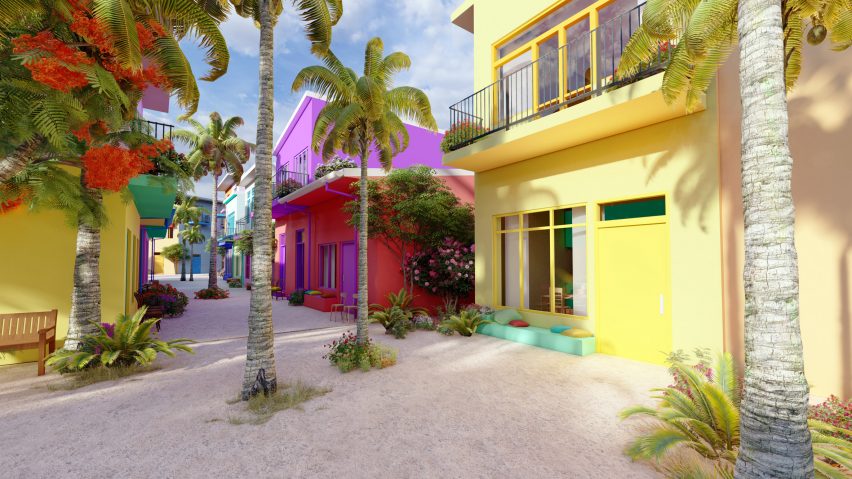
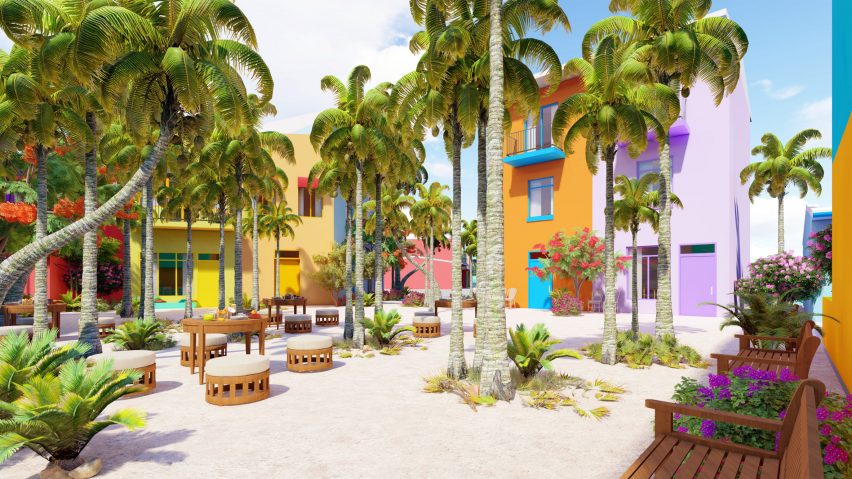
The island is envisaged as a boating community, with canals acting as the primary transportation infrastructure and providing several access points. No cars will be allowed on the island’s white sandy roads — only bicycles and electric, noise-free buggies and scooters.
Sales of properties will begin soon and it is anticipated that the first residents will be able to move on to the island in 2024. Each residence will measure 100 square metres and have its own jetty and roof terrace. They will be priced from $250,000.
The project also offers “a world-class ownership structure that is transparent, value-driven and legally-binding”, according to Waterstudio, allowing international buyers to live here permanently.
Watch
Video
Maldives Floating City – Finalist Mipim Awards
The Maldives Floating City has been shortlisted for the MIPIM Awards, which is famously known as the “Oscars for Global Development”. The MIPIM Awards is regarded as the most prestigious award given on an international scale for development projects while MIPIM is a global real estate event, that is widely considered as the world’s leading such event. The Maldives’ floating city project was shortlisted under the “Best Future Mega Project” category from among 161 other such projects. This modern and innovative concept aims to provide housing for the locals as well as attract tourists.
Maldives Floating City – Finalist Mipim Awards.
Inspiration
Brain Coral: Concept Inspiration for Maldives Floating City
Maldives Floating City is the first development of a new era in which Maldivians return to the water with resilient eco-friendly floating projects. The city has a nature-based structure of roads and water canals resembling the beautiful and efficient way in which real brain coral is organised. The idea of having brain coral as the leading concept is that the goal of living with nature and learning to improve and respect natural coral is at the heart of the development, which leads to new knowledge emphasising the responsibility Maldives takes as centre for coral protection in the world.
Facts
•
A development of Dutch Docklands in joint-venture with the Government of Maldives
•
Masterplan architect: Waterstudio.nl
•
Lagoon close to the capital Male and the International Airport
•
Lagoon over 200 ha (more than 500 acres)
•
Several thousands of housing units, all floating, all waterfront
•
Mixed-use community: residential, hotels, shops, restaurants
Sales will start soon and expressions of interest can already be made on this website.
Maldives Floating City, a benchmark for vibrant communities beyond the waterfront.
It is the first floating city with thousands of houses that has full governmental support, based on a legal framework and title deeds for the owners. It also offers the unique possibility to obtain a residence-permit with the purchase of a house, inviting the international community to live here (semi) permanently and enjoy the Maldivian lifestyle, mixing green values with a sense of place based on centuries of experience with living with the sea. And then the perfect weather and tropical surroundings…
Maldives Floating City is based on the local culture of this sea-farers nation. Maldivians have a strong relation with the sea, so living on water is aligned with their culture and history. The city characterizes as a boating community, using the canals as main infrastructure for logistics and gateways, and by doing so reducing land-based movements to walking and biking on natural white sand roads. No cars are allowed, only bicycles and electric noise-free buggies/scooters.
Developer Dutch Docklands and the architects of Waterstudio have conceptualized a next-generation sea-level rise-proof urban development, bringing safety and development space to the Maldives with a mix of green technology, safety, commercial viability and a healthy new lifestyle, which will be the backbone of future floating cities. By doing so, the Maldivians will rewrite their destiny from climate refugees to climate innovators.
Located on only ten minutes by boat from the capital Male and the international airport, the Maldives Floating City is a dynamic, flexible city with a smart grid that can respond to dynamic demand, weather and climate change. It uses innovative sustainable development technologies and applies ecological best practices to protect, preserve and enhance the pristine marine eco-system. This concept is a world first and a will be the benchmark for future developments around the globe.
It is a unique city, both above and underneath the water surface, creating blue habitats projecting and stimulating coral growth. Artificial coral banks will be attached to the underside of the city, which will stimulate coral to grow naturally. The submerged and protected coral reefs of the lagoon will provide a natural wave (reduction) breaker that, in combination with the interrelated grid of floating structures, provides comfort and safety for the residents.
Masterplan


10 Requirements
01. Legality
A floating city must be part of a legal framework of a city or country. This gives the inhabitants a legal status. The floating homes and other structures must be labelled as real-estate, like in Maldives, in order to make finance and insurance possible.
02. Construction modularity
A city consisting of thousands of units can only be build when infrastructure and units are built from a modular system in order to ensure quality, standardization, certification, short construction time, cost control and efficient maintenance.
03. Accessibility
A floating city needs gateways for inhabitants and visitors to reach the city easily. Modern cities have hundreds of entrance points, a cruise ship has only a few. A floating city with canals provides multiple access points.
04. Power supply
Power and utilities are the backbone of a floating city. The reduction of energy consumption and production of green/blue energy in a smart grid where each unit shares and uses the surplus of available energy is an essential element for a viable floating city.
05. Supply and waste management
The healthy viable metabolism of a floating city is depending on the supply and distribution of goods, storage and controlled waste treatment and disposal. Supply and waste management must be integrated in the urban planning. A healthy floating city starts with the metabolism structure.
06. Environmental impact
Shadows caused by space covered with floating structures must be in balance with the amount of sunlight that can reach the seabed. Large floating structures must provide enough open space. The floating structures must enhance underwater life, instead of causing any negative effects.
07. Mooring, stability and safety
Forces of nature, waves, extreme weather, and sea-level rise for a 100-year prediction must be engineered in advance. Rigidity versus flexibility and a mooring system that can divert all the extreme forces are the base of a floating city design. Single structure city foundations act as huge mega ships, which have to handle enormous forces. By dividing the city in elements these forces can be handled in a more effective way with minimal risks.
08. Defence, law and order
A floating city needs law and order as well as a defence system. Once the floating city is part of an existing law and order framework, this will enable inhabitants to live in a safe and protected environment.
09. Community based city
A floating city must be a dynamic city, which means its structure must have ability to be adjusted, appended and updated as building for change is the only way to response to unknown challenges of the future. A city with a growth model existing of smaller structures will provide this flexibility.
10. Flexibility and response time
A floating city is more than just the sum of the built structures. Community-based developments are based on culture and common liveability goals, and will be the backbone of a healthy and feasible city.
Residence Permit
Foreign buyers of a house in Maldives Floating City can apply for a Residence Permit in Maldives. More information will follow soon.
Maldives to build one of the world’s first floating cities as response to climate change
Up to 20,000 people will live in the new district and $250,000 homes could be on sale as early as 2024


The design of Maldives Floating City is inspired by brain coral, a type of marine organism resembling the human brain. All photos: Waterstudio/Dutch Docklands Maldives

Jun 28, 2022
The Maldives will soon be home to one of the world’s first floating cities.
Set in a warm-water lagoon close to the capital, Male, the new district will feature thousands of waterfront residences built across a flexible, functional grid. Up to 20,000 people will inhabit the development, which will consist of a series of hexagonal-shaped floating structures.
Inspired by traditional Maldivian seafaring culture, Maldives Floating City will also eventually be home to hotels, restaurants, boutiques and a world-class marina.
The project has been under research since 2009 and is due to be fully completed by 2027. It was conceptualised by Dutch architecture firm Waterstudio, in partnership with the government of the Maldives and Netherlands-based developer Dutch Docklands.
It is believed to be the first floating city in the world to be built as an island, with similar projects testing the waters in South Korea and the Netherlands. Smaller floating communities can also be seen around the globe from Peru to Vietnam.
Dubbed “a next-generation sea urban development” that can withstand rising sea levels, the island will be able to respond to the effects of climate change. It is particularly important given that 80 per cent of the Maldives sits less than one metre above sea level and it is predicted much of the archipelago will be uninhabitable by 2100 due to rising sea levels.

Each residence will measure 100 square metres and have its own jetty and roof terrace. Photo: Waterstudio/Dutch Docklands Maldives
Safety and stability are key considerations when it comes to creating a floating structure of this size. “Forces of nature, waves, extreme weather and sea-level rise for a 100-year prediction must be engineered in advance,” reads the Waterstudio website.
“Rigidity versus flexibility and a mooring system that can divert all the extreme forces are the base of a floating city design. Single-structure city foundations act as huge mega ships, which have to handle enormous forces. By dividing the city in elements these forces can be handled in a more effective way with minimal risks.”
The design is inspired by brain coral, a type of marine organism that, due to its spherical shape and grooved surface, resembles a human brain. The project intentionally takes its design cues from nature and is respectful of its marine environment. Artificial coral banks will be attached to the underside of the floating city to stimulate natural coral growth. Meanwhile, submerged and protected coral reefs will provide a natural wave breaker.
“Maldives Floating City does not require any land reclamation, therefore has a minimal impact on the coral reefs,” explains Mohamed Nasheed, who was president of the Maldives from 2008 to 2012.
“What’s more, giant, new reefs will be grown to act as water breakers. Our adaption to climate change mustn’t destroy nature but work with it, as the Maldives Floating City proposes. In the Maldives we cannot stop the waves, but we can rise with them.”
READ MORE
Yemeni engineer unveils designs for flying sky hotel that can accommodate 5,000 guests
The island is envisaged as a boating community, with canals acting as the primary transportation infrastructure and providing several access points. No cars will be allowed on the island’s white sandy roads — only bicycles and electric, noise-free buggies and scooters.
Sales of properties will begin soon and it is anticipated that the first residents will be able to move on to the island in 2024. Each residence will measure 100 square metres and have its own jetty and roof terrace. They will be priced from $250,000.
The project also offers “a world-class ownership structure that is transparent, value-driven and legally-binding”, according to Waterstudio, allowing international buyers to live here permanently.
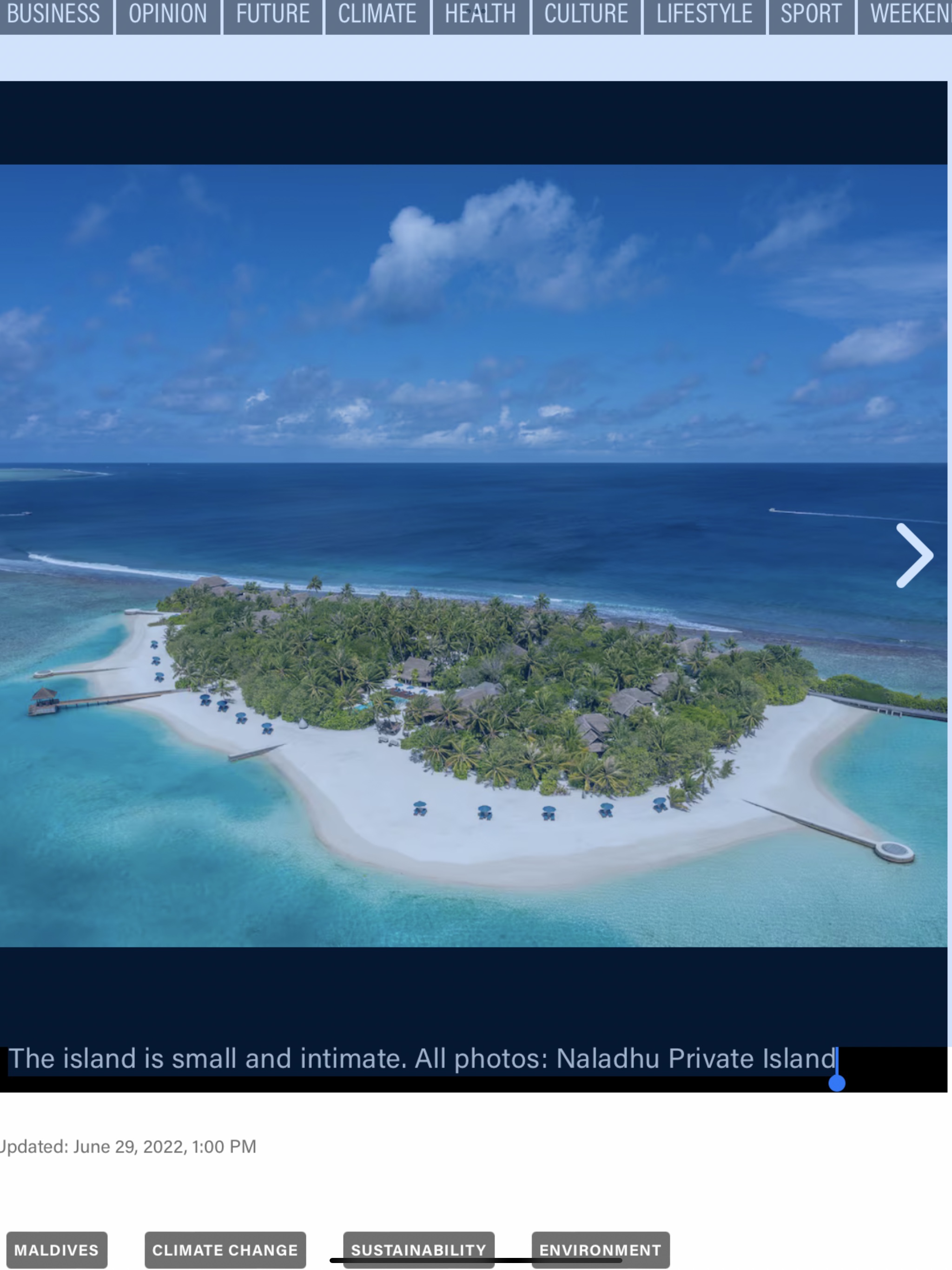
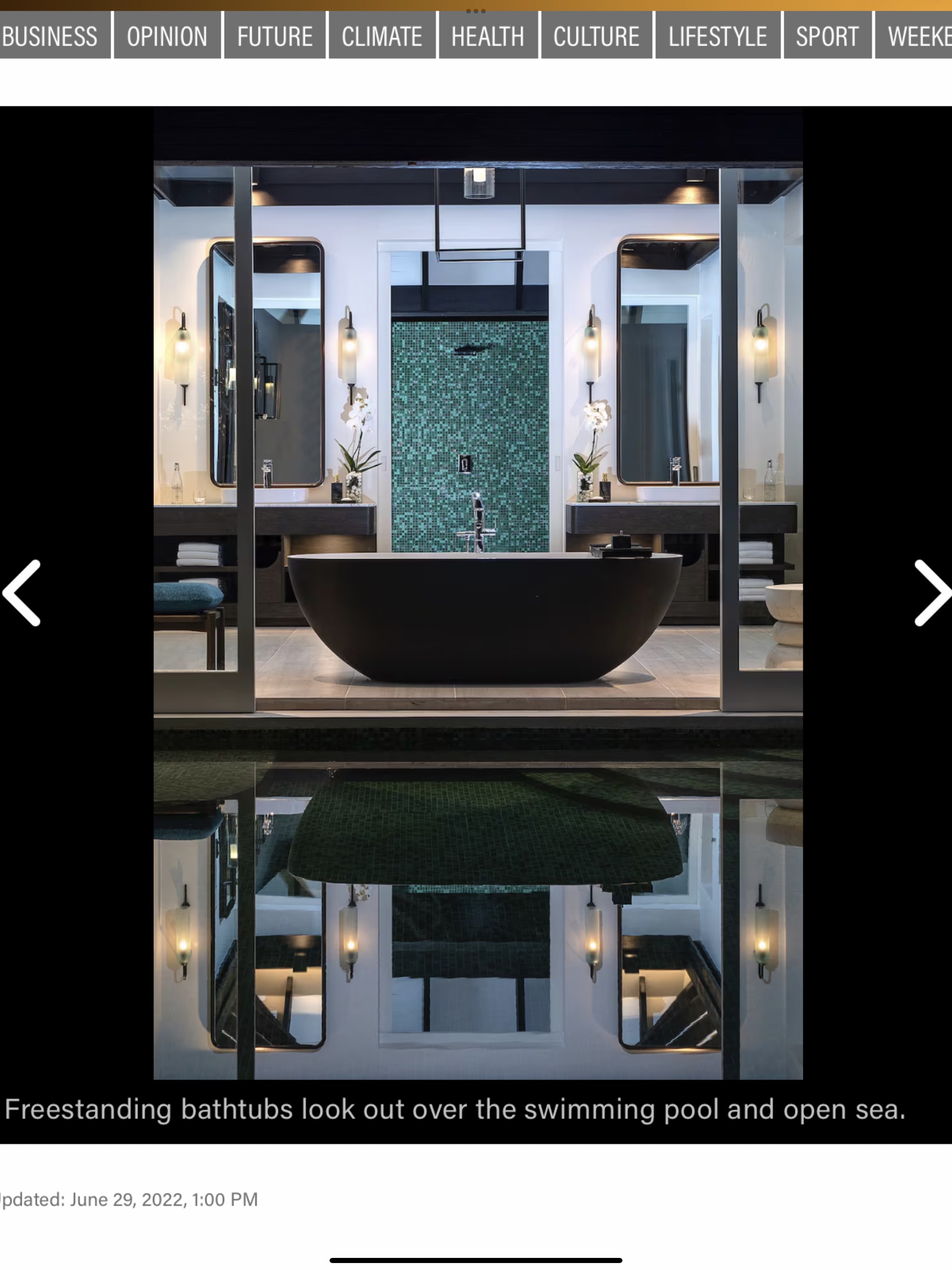
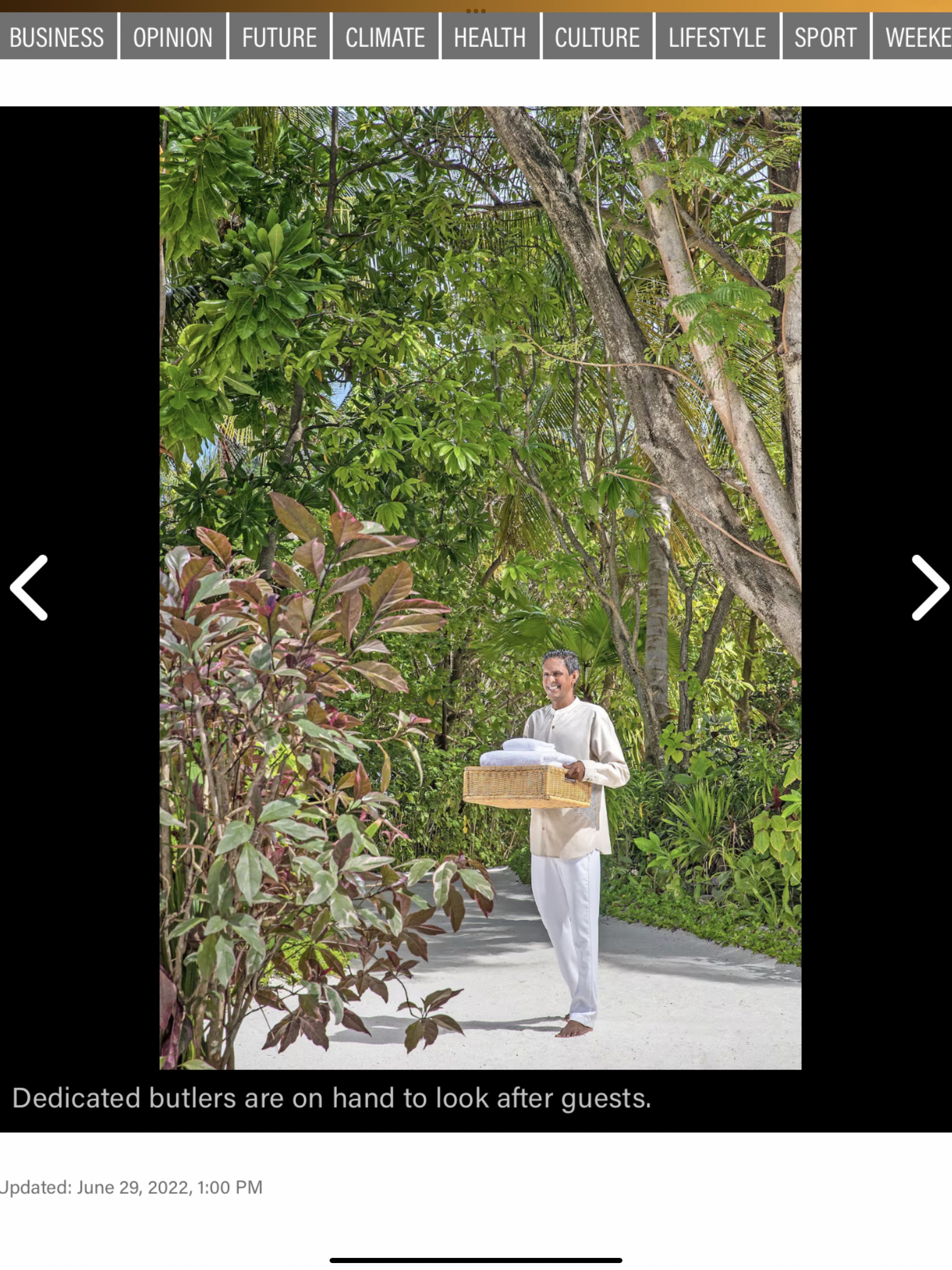
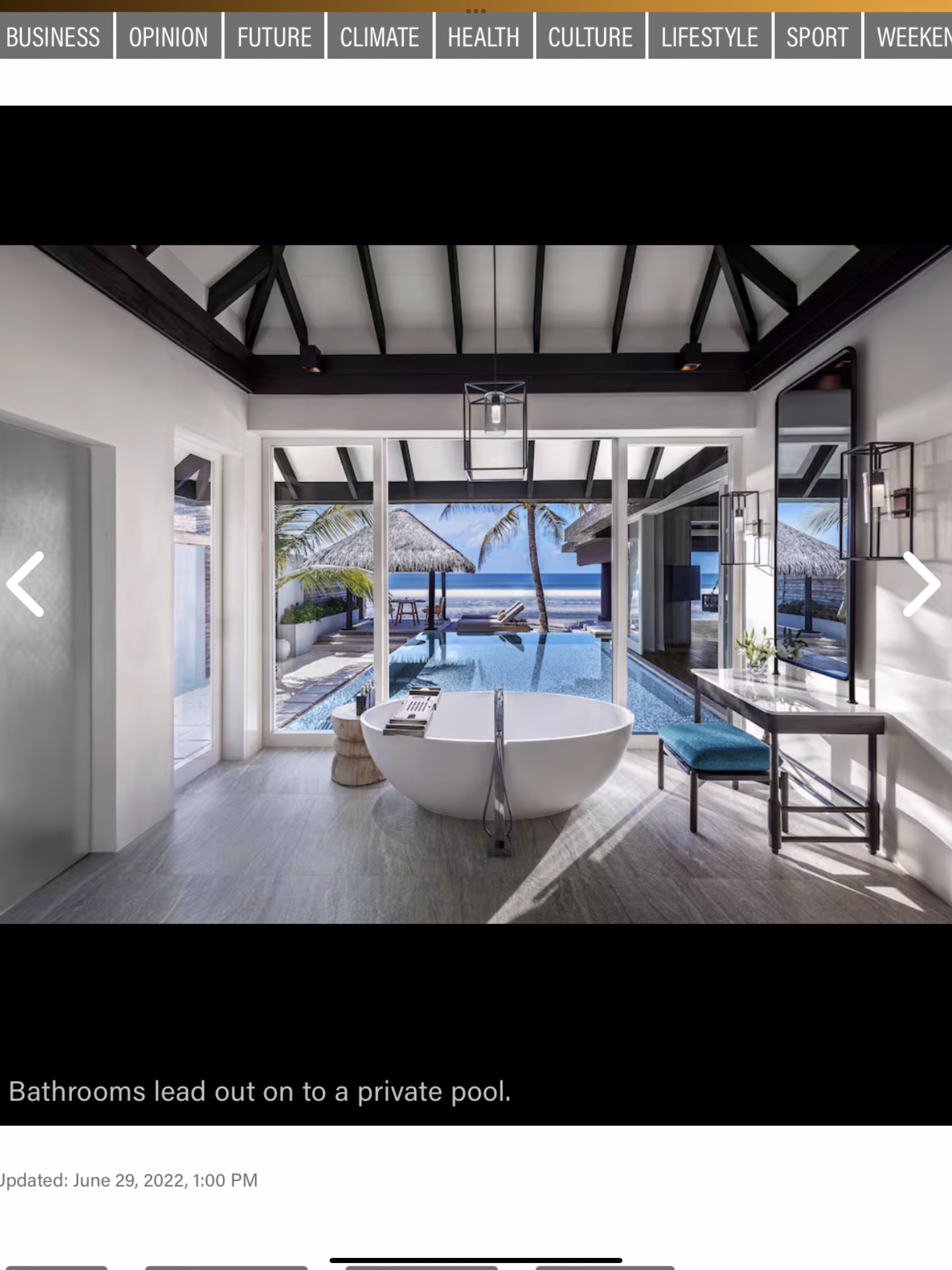
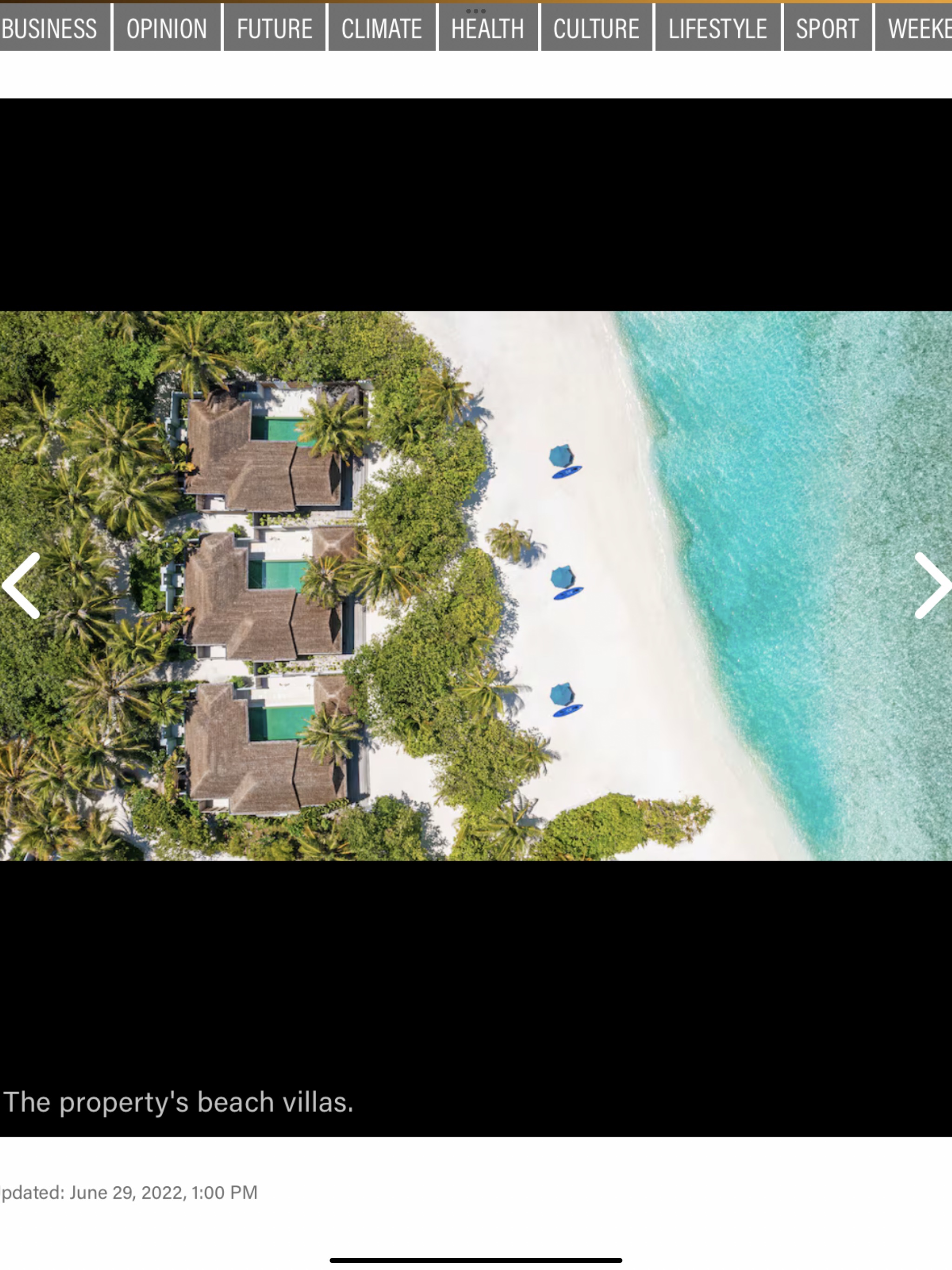
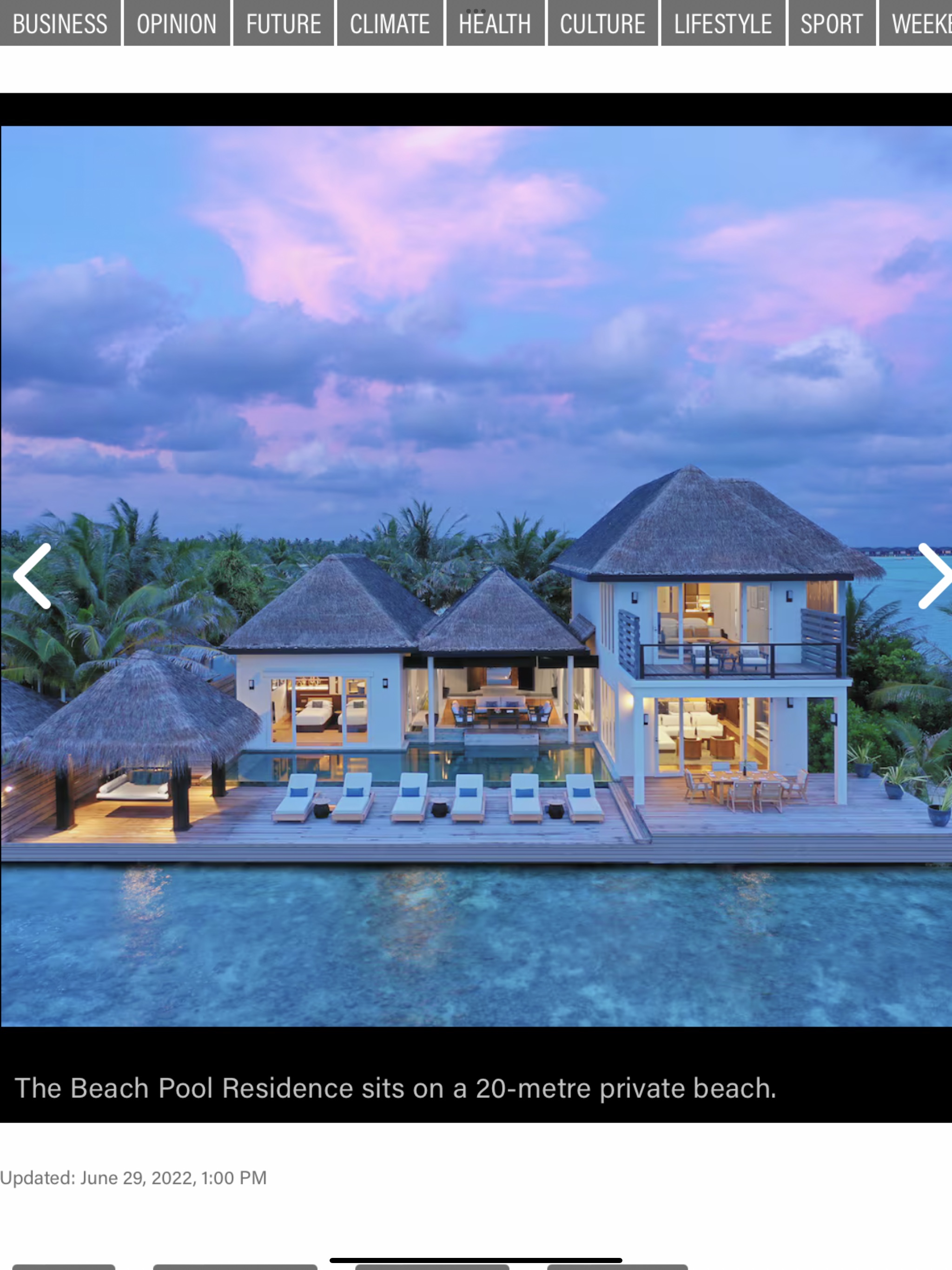
Supreme seclusion at Naladhu Private Island in the Maldives— in pictures



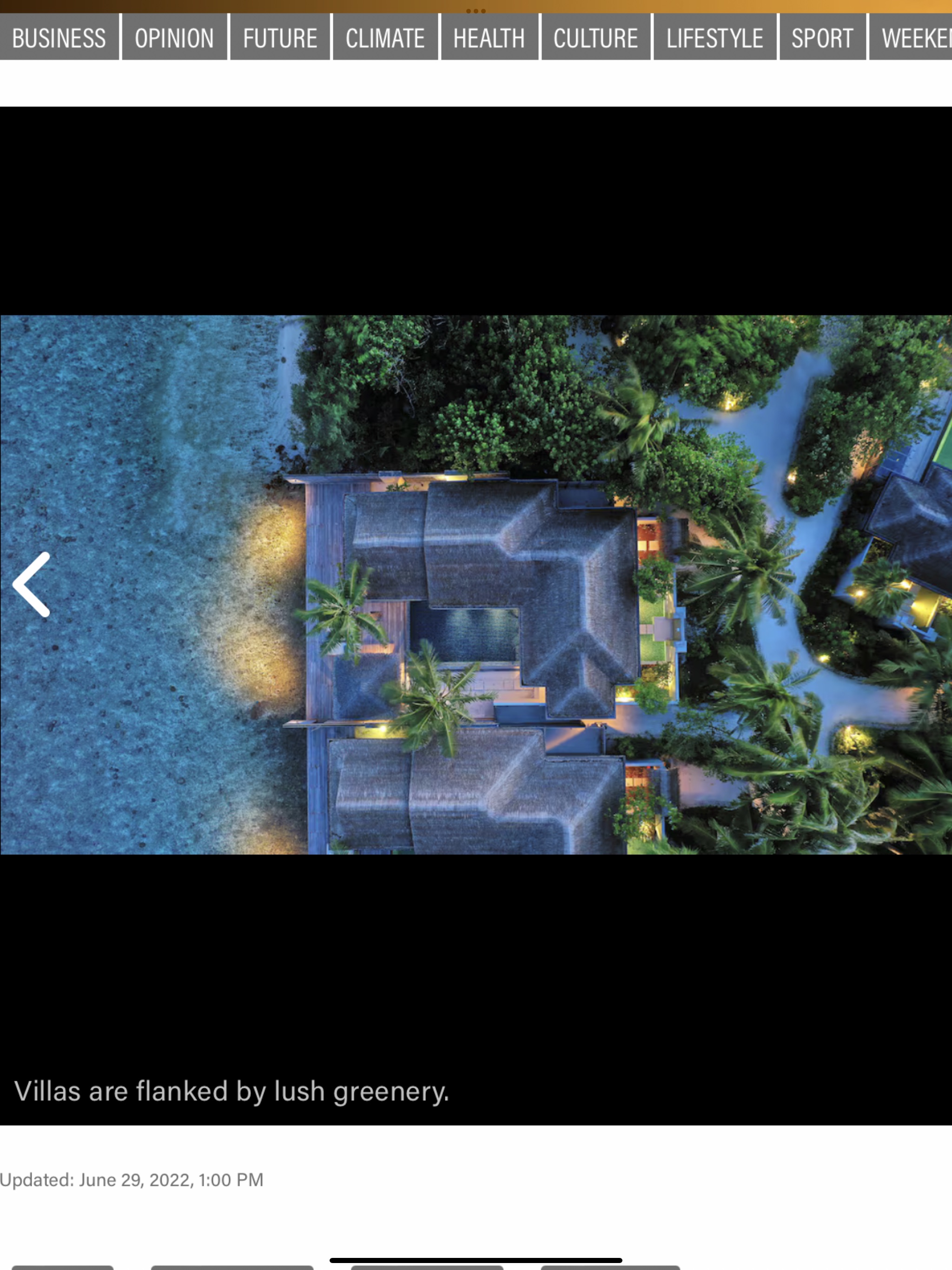
THIS IS WHAT THE MALDIVES FLOATING CITY OF THE FUTURE WILL LOOK LIKE
TUESDAY, APRIL 04, 2023
MY LIST
SHARE
Author | Jaime Ramos
Almost 97 millimeters. That is how much sea levels have risen in the past 30 years according to NASA measurements. How are we going to tackle the challenge of adapting cities to the catastrophic consequences of this phenomenon? The so-called floating cities may be a solution.
This is what they believe in the Maldives. No wonder, the approximately 1,200 islands that make up the country, 203 of which are inhabited, make it the lowest nation in the world, with average natural ground levels of only 1.5 meters above sea level. Its geographical characteristics have led the country to take action to combat the looming threats affecting its insular communities. Among the most promising projects is the construction of a floating island that will house 20,000 people.
This is not the first time we have seen floating cities as an original way of addressing some of the most pressing urban needs. A prime example is Oceanix, in South Korea.
WHAT WILL THE MALDIVES FLOATING CITY BE LIKE?
The Maldives Floating City project defines itself as ” the first development of a new era in which Maldivians return to the water with resilient eco-friendly floating projects.” This will be achieved by placing 5,000 homes along a flexible grid across a 200-hectare lagoon. Just ten minutes by boat from Malé, the Maldivian capital, the floating city project is in an advanced stage of development and the first residents are expected to arrive as early as 2024.
WHO IS BEHIND THE FLOATING CITY PROJECT?
The Maldives Floating City has been designed by two architecture firms in the Netherlands, Waterstudio and Dutch Docklands. Their architectural expertise has led them to develop specific water-based urban planning integration solutions.
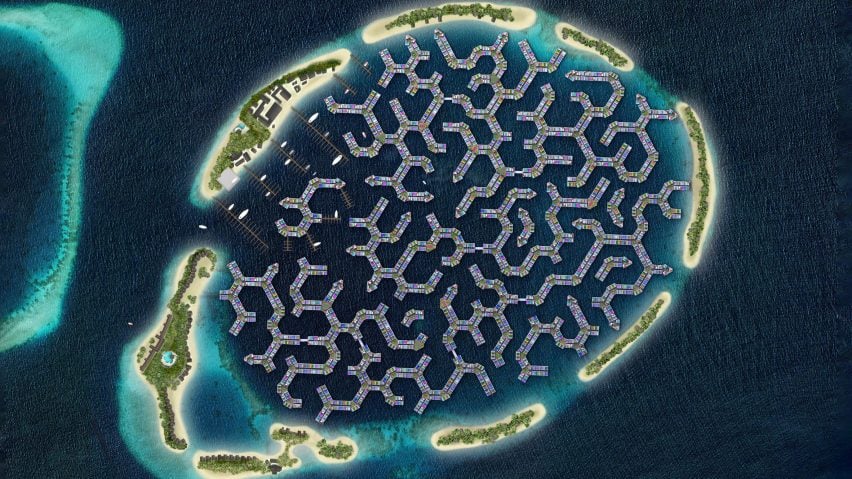
The design of the Maldives Floating City is based mainly on the shapes and outlines of a local coral called brain coral, the diploria labyrinthiformis. When viewed from above, the city will resemble the brain coral. The developers define the city as a “nature-based structure of roads and water canals.”
FLOATING CITIES AS A SOLUTION TO RISING SEA LEVELS

The Maldives Floating City is the first major step towards tackling an urgent problem. According to the World Bank, future sea levels are projected to increase in the range of 10 to 100 centimeters by the year 2100. With these estimates, the Maldives could be completely submerged.
This has led to action being taken. The floating city represents a major commitment that embraces sustainable and modular urbanization. Everything is designed from an environmental perspective. The city will be equipped with a smart energy grid powering the city solely with renewable energy. Furthermore, property prices are expected to stay below $250,000, in an attempt to attract local residents, rather than just building a residential complex for tourists.
All urban facilities and services have been taken into account in the design of the city. Apart from houses, the floating neighborhood will have shops and restaurants. Transport will be restricted to small electric vehicles and bikes. And, more importantly, the structure of the floating city will solve the issue of the threat posed by rising sea levels, withstanding future environmental crises.
Images | Waterstudio
TAGS
ARCHITECTURECLIMATE CHANGECLIMATE EMERGENCYINFRASTRUCTURE & BUILDINGSMART BUILDINGSSMART INFRASTRUCTURESTOMORROW.MAGURBAN PLANNING
Architecture and Design Global Megaprojects News
Designs unveiled for floating city in the Maldives
Sion Geschwindt0


Netherlands-based design firm Waterstudio.NL, in collaboration with Dutch Docklands and the Government of The Maldives, has unveiled designs for the Maldives Floating City (MFC).
The project has been in development for over a decade, and will feature thousands of residences, floating along a flexible, functional grid across a 200-hectare lagoon.

Designed in a coral-like pattern, the city will consist of 5,000 floating units. These units will include houses, restaurants, shops, and schools, with canals running in between.
In total, the hurricane-proof city expects to house up to 20,000 people.
The first units are to be revealed this month, with residents beginning to move in early 2024. The whole city is set to be completed by 2027.The whole city is set to be completed by 2027 (credit: Waterstudio.NL)
Koen Olthuis, founder of Waterstudio, commented: “Floating real estate will provide safety and building space for overcrowded and flood-threatened cities.
“Floating developments will push real estate beyond the waterfront which will change our cities similar to the introduction of high rise buildings a century ago.”
Average prices start at at $150,000 for a studio or $250,000 for a family home, Olthuis said.
Currently the units will be built in a local shipyard, which they will then tow to the floating city.
Once they are shipped to the city, the units will be attached to a large underwater concrete hull, which is screwed to the seabed on telescopic steel stilts allowing it to move smoothly with the waves.
Maldives Floating City is one of a few such projects currently in the works.
In April, the United Nations announced the construction the first floating city off South Korea’s second-largest city, Busan.
Known as Oceanix City, it plans to provide homes for a community of 12,000 people, potentially rising to 100,000, with construction due to start in 2023.
Image credit: Waterstudio.nl
Maldives reveals “world’s first true floating island city” to cope with rising sea levels
The Maldives has partnered with architecture studio Waterstudio to create a brain-shaped floating city that will house 20,000 people in a lagoon near the country’s capital.
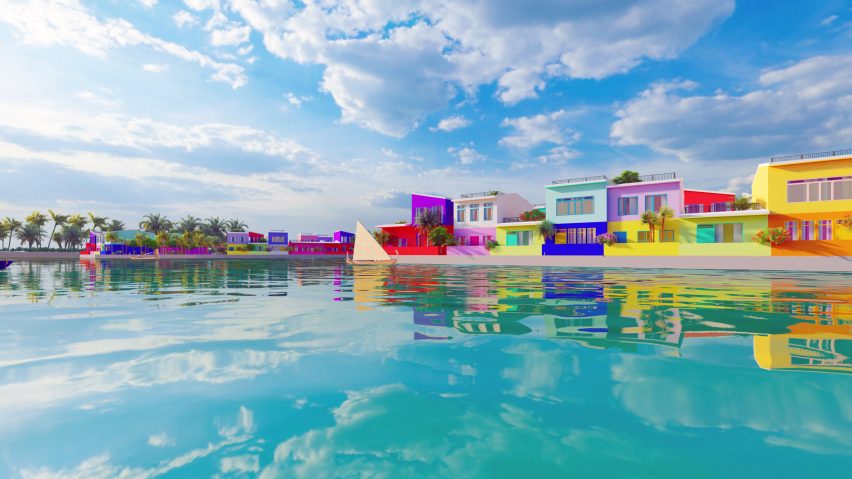
Called Maldives Floating City, the development will contain 5,000 low-rise floating homes floating within a 200-hectare lagoon in the Indian Ocean. As sea levels rise, so too will the city, which will be built upon a series of hexagonal-shaped floating structures.Maldives Floating City will accommodate up to 20,000 residents
In the Maldives, 80 per cent of the country sits less than one metre (three feet) above sea level.
With the Maldives islands predicted to be uninhabitable by 2100 due to rising sea levels, the government of the Maldives hopes to offer up to 20,000 locals and foreigners the opportunity to move to the floating city as early as 2024.
Construction is planned to begin later this year on the development, which will be 10 minutes by boat from the Maldivian capital Male.
“This first-of-its-kind island city offers a revolutionary approach to modern sustainable living perched against a backdrop of the azure Indian Ocean,” said the studio.
“It’s the world’s first true floating island city – a futuristic dreamscape finally poised to become reality.”Rows of low-rise houses would float on the complex
Maldives Floating City is among a number of floating city proposals, including Oceanix Busan by architecture firms BIG and Samoo and tech company Oceanix that are designed to offer a housing solution to rising sea levels and global temperature increases.
However, developer Dutch Docklands claims that none have been attempted on this scale and at this speed with full governmental support.
“While attempts at floating cities have been tried before, none have featured Maldives Floating City’s most compelling selling points: full-scale technical, logistical and legal expertise,” explained Dutch Docklands.Read: BIG and Samoo unveil design for “flood-proof” floating city Oceanix Busan The development, which is set to be fully completed by 2027, will be composed of a series of hexagonal islands modelled on the geometric shapes of a local coral called brain coral. When combined and viewed from above the development will resemble a brain.Read:BIG and Samoo unveil design for “flood-proof” floating city Oceanix BusanThe development, which is set to be fully completed by 2027, will be composed of a series of hexagonal islands modelled on the geometric shapes of a local coral called brain coral. When combined and viewed from above the development will resemble a brain.
Artificial coral banks will be attached to the underside of the floating city to stimulate natural coral growth.Residents are expected to be able to move to the city in 2024
The living platforms will support houses, hotels, restaurants, shops, a hospital, a school and a government building.
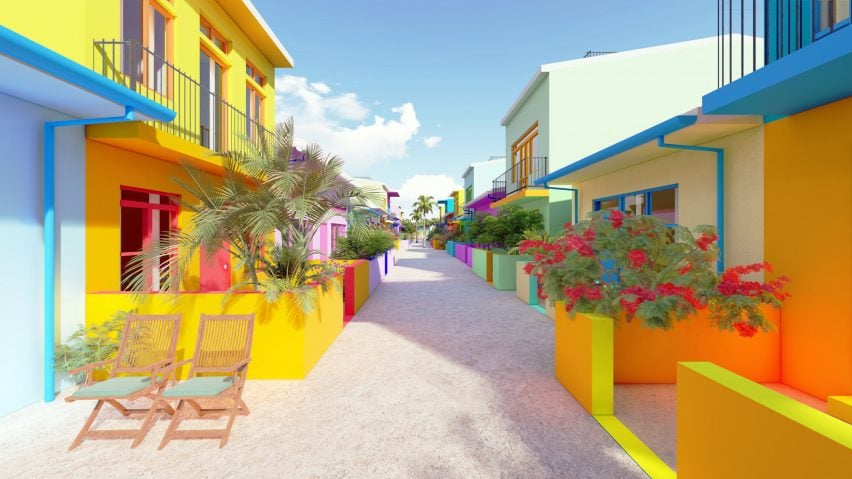
Each seafront residence will be 100-square-metres and have a jetty attached to its front and a terrace on its roof. Dutch Docklands says they will be priced from $250,000 (£203,538.50).Read:BIG and Samoo unveil design for “flood-proof” floating city Oceanix Busan
Waterstudio, Dutch Docklands and the Maldivian government drew on the sea-faring culture of the Maldives for the concept.
“As a nation at the front lines of global warming, the Maldives is perfectly positioned to reimagine how humankind will survive — and, indeed, thrive — in the face of rising seas and coastal erosion,” said the Dutch Docklands.
“Inspired by traditional Maldivian sea-faring culture and developed in close cooperation with Maldivian authorities, Maldives Floating City homes will eventually be joined by hotels, restaurants, stylish boutiques and a world-class marina.”Alongside homes, the city will have hotels, restaurants, shops, a hospital, a school and a government building
The Intergovernmental Panel on Climate Change (IPCC)’s Sixth Assessment Report 2022, states that small island nations such as the Maldives may become completely uninhabitable as the world is on track to warm by two to three degrees this century.
“The world faces unavoidable multiple climate hazards over the next two decades with global warming of 1.5°C (2.7°F)” the report by the United Nations’ climate change panel said.
“Even temporarily exceeding this warming level will result in additional severe impacts, some of which will be irreversible.”
“Risks for society will increase, including to infrastructure and low-lying coastal settlements.”
Viable solutions for urban development into the ocean listed in the report include elevating houses on stilts and creating “amphibious architecture” that can float on the surface of rising floodwater.
The images are courtesy of Waterstudio/Dutch Docklands Maldives.
Dezeen is on WeChat!
Click here to read the Chinese version of this article on Dezeen’s official WeChat account, where we publish daily architecture and design news and projects in Simplified Chinese.
Read more:
 မှတ်ဖွယ်မှတ်ရာ စာပဒေသာ
